
Choosing a business location is not an easy decision, especially with limited capital. Many business owners are caught in a dilemma: choose a cheap but quiet location, or a strategic location but expensive rent? The answer isn’t that simple.
The right location depends on the type of business you run. Businesses that rely on people traffic, such as cafes, restaurants, or retail stores, require a busy and easily accessible location.
Meanwhile, B2B businesses like wholesalers don’t always need a strategic location because customers have a purpose, not just passing by. This means that each type of business has different location criteria, and the best way to determine this is by using Location Intelligence, a data-driven approach that helps you choose the most optimal location without having to guess.
In this article, we’ll discuss the differences between cheap and strategic business locations, factors to consider, tips for choosing the best location, and how location intelligence can help you find the most optimal location even with limited capital.
Contents
Why Is Business Location So Important?
Business location is one of the most fundamental factors that determines the long-term success of a business. It directly affects how easily your business can be found, how many customers walk through the door, and ultimately, how much revenue it generates.
According to VOI.id, 70% of culinary businesses fail within just 1 to 3 years, and one of the leading reasons is poor location selection.
For businesses like retail stores and restaurants, being in a strategic location isn’t just an advantage, it’s a necessity. Their business model relies heavily on impulse buying, where a spontaneous purchase decision happens simply because someone spots your store while passing by.
This is why these businesses tend to set up in high-traffic areas like shopping centers, office districts, and areas near schools. On the other hand, B2B businesses such as distributors and wholesalers operate with a completely different set of priorities.
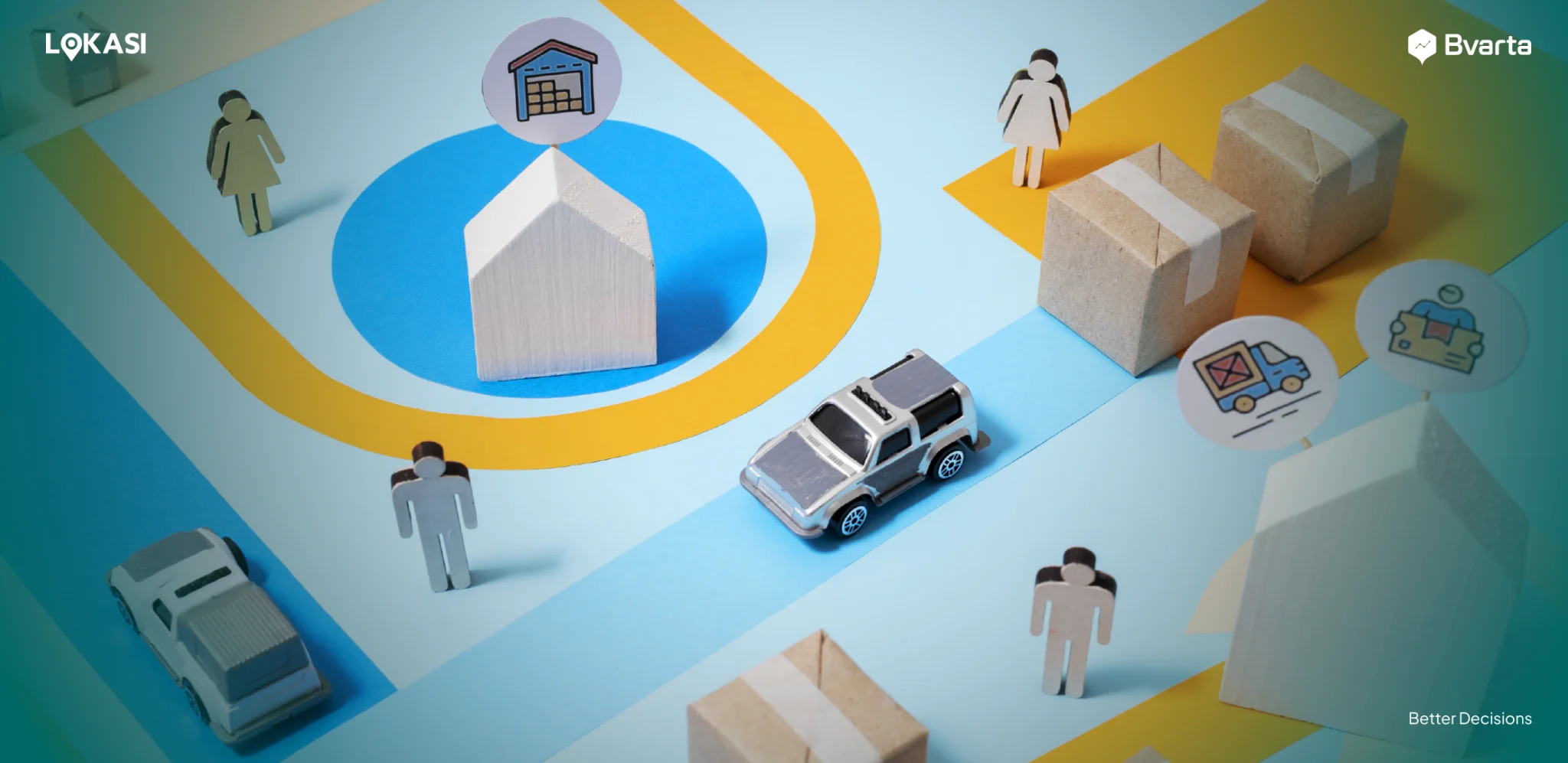
What matters most to them is proximity to major transportation routes, wide road access, and enough space for loading and unloading large volumes of goods.
In fact, being in an overly busy location can work against them. Heavy traffic slows down deliveries, large vehicles struggle to maneuver in tight spaces, and limited storage area makes warehouse operations far less efficient.
This is exactly why there is no one-size-fits-all approach to choosing a business location. Every business has its own unique needs, and understanding those needs is the first step before deciding where to plant your flag.
The Difference Between Strategic and Affordable Locations
Strategic and affordable locations have very different characteristics, and each suits a different type of business. Here’s a breakdown:
Focus
Affordable locations are centered around keeping operational costs low. Rent is significantly cheaper than commercial areas, tax burdens are lighter, and construction or renovation costs don’t require a large upfront investment.
Businesses that gravitate toward these locations typically operate with a model that doesn’t rely on walk-in customers, such as wholesalers, warehouses, factories, distribution centers, or back-office operations that prioritize cost efficiency over public visibility.
Strategic locations, on the other hand, are all about maximizing revenue. Businesses here benefit from consistently high daily foot traffic, which directly translates into more opportunities for transactions.
Characteristics
Affordable locations are usually found in suburban areas, underdeveloped zones, or areas far from the center of community activity. These areas tend to be quiet, with limited public facilities and amenities.
Strategic locations, by contrast, are typically situated in busy city centers, along major roads, or in well-established commercial districts that are widely recognized.
Visibility is high, making businesses easy to spot and find. They are also close to target markets and conveniently located near public transportation hubs such as bus stops, train stations, and city terminals.
Costs
Affordable locations offer a significantly lower cost structure. Rent is cheap because these areas sit far from the city center, see less activity, and have yet to develop commercially.
Strategic locations command a premium. These areas sit at the heart of city activity, supported by well-developed infrastructure — well-connected main roads, accessible public transportation, and a full range of business-supporting facilities already in place.
It is this high demand, driven by the advantages these locations offer, that pushes rental prices and property values considerably higher.
Factors to Consider Before Choosing a Location
Before settling on a location, there are several important factors to consider, especially for first-time business owners:
Business Model
The first factor to consider is your business model, as this directly determines what kind of location is most ideal for your business.
If your business is Business-to-Consumer (B2C), where products or services are sold directly to end consumers such as retail stores, restaurants, or cafes, then a busy, easy-to-find, and easily accessible location should be your top priority.
On the other hand, if your business is Business-to-Business (B2B), where products or services are sold to other businesses such as suppliers or distributors, public visibility is less of a concern. What matters more is easy access for your business partners.
Target Market and Demographics
The second equally important factor is demographic fit, whether the people who live or spend time around that location match your target market.
Even a busy location won’t do much good if the people there aren’t the type of consumers you’re targeting. Imagine opening a coffee and snack shop in an area where the majority of visitors are children and elderly people, two segments that are unlikely to be your core customers.
On the flip side, if that same location is filled with young people who enjoy hanging out and working over a cup of coffee, your chances of growing the business are significantly higher.
The same logic applies to B2B businesses. If you run a wholesale operation, the key question to ask is: “Are there enough retail stores, small shops, or small businesses nearby that could become my regular customers?” Without a sufficient target market around your location, growing your sales volume will be an uphill battle.
Competitors
Competitors are one of the most overlooked factors when choosing a location, yet their impact on your business can be enormous.
What you need to know isn’t just who your competitors are, but also how many of them there are, where they are spread across the area, and how close they are to the location you’re eyeing. This information helps you assess whether an area is still worth entering or whether it’s already too saturated.
If an area is packed with competitors, it has likely reached a saturation point. That means consumers there already have plenty of options, and your business will have to fight hard just to get noticed. In that situation, choosing a more open area makes far more sense.
On the other hand, an area with few competitors gives you room to grow without the pressure of intense competition. Your business can become the go-to option in that area and build a customer base much more quickly.
One thing to keep in mind: a lack of competitors doesn’t automatically mean a big opportunity. It could simply mean there isn’t enough demand in that area to begin with.
This is why competitor analysis should always go hand in hand with demand and demographic analysis. Together, all three give you a far more accurate picture of a location’s true potential.
Which One Is Better for Your Business?
There is no one-size-fits-all answer when it comes to choosing between a cheap or strategic location. What matters most is how your business generates revenue and who your customers are.
B2C Businesses: Go with a Strategic Location
If your business operates in the B2C space, such as a restaurant, retail store, cafe, or salon, a strategic location is the right investment.
These businesses depend heavily on how easily they can be found and accessed. B2C customers often make spontaneous purchase decisions: they spot your store while passing by, get curious, and walk in.
Without enough visibility, that moment never happens.
B2B Businesses: An Affordable Location Can Be the Smarter Choice
Businesses that serve corporate clients or fellow business operators, such as distributors, wholesalers, or suppliers, operate with a completely different logic.
Their customers don’t show up because they saw a sign on the side of the road. They come because there’s already an existing agreement, a specific need, or an established business relationship.
What matters far more for B2B businesses is having enough space to operate, a spacious warehouse, adequate road access for large vehicles, and an efficient loading and unloading area.
These needs are much easier to meet in a more affordable location, away from the hustle and bustle of the city. And with lower rent costs, profit margins can be kept in much better shape.
How to Find the Most Optimal Business Location with Location Intelligence
Beyond conducting manual surveys, one of the most effective methods for finding the right location is by using Location Intelligence technology.
Location Intelligence works by analyzing geospatial and location data, such as consumer movement patterns, population density, purchasing power, and competitor distribution, to generate insights that can be acted on immediately.
The result is that businesses don’t just know where to set up shop, but also why that particular location is the best choice.
One platform that provides this solution is LOKASI Intelligence. Here is how LOKASI Intelligence helps businesses find their most optimal location:
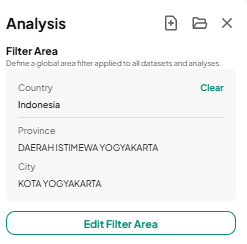
The first step is to determine the area you want to analyze. In this example, we will be using the City of Yogyakarta, Special Region of Yogyakarta, as the target area.
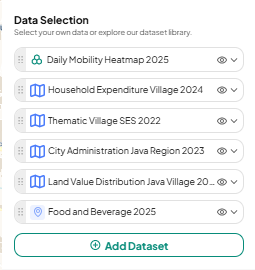
Next, input the relevant data based on the type of business you plan to open. For example, if you are planning to open a food and beverage business, you can select data such as:
- Demographic data to understand the characteristics of the population in that area
- Household expenditure data to gauge the purchasing power of the surrounding community
- Land value data to find out property prices in that area
- Food and Beverage Point of Interest data to see how many food and beverage businesses are already operating in the area
- Mobility data to understand how busy and active that area is
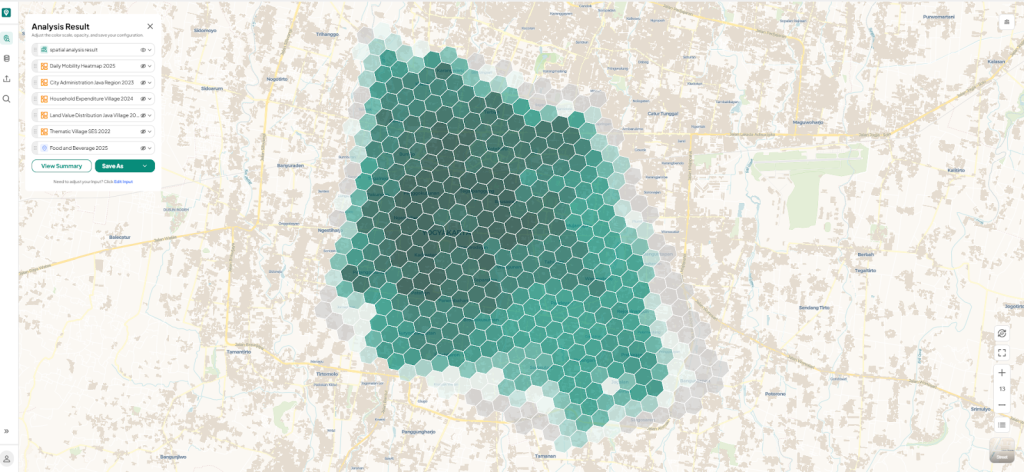
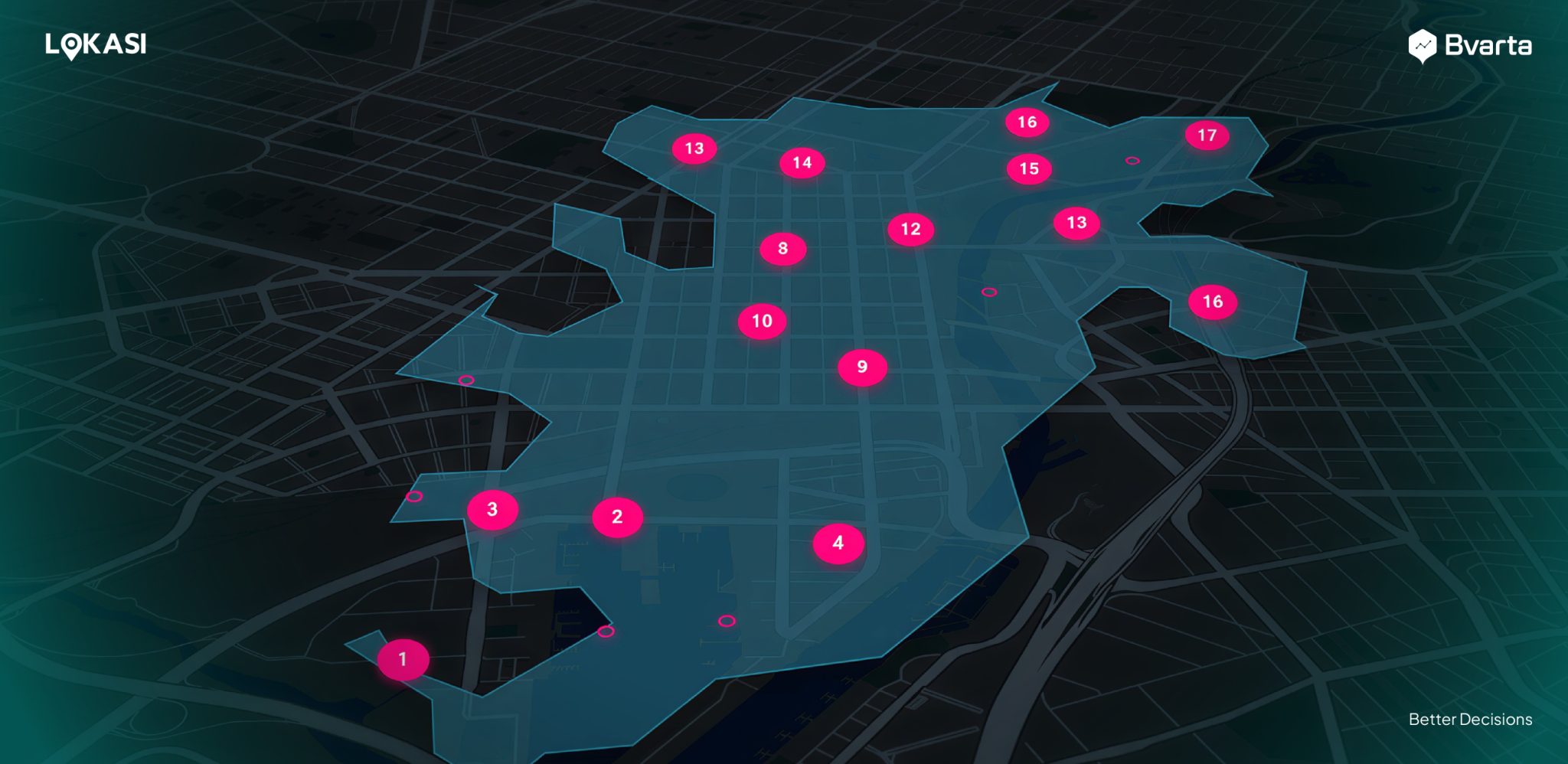
Once the data is entered, LOKASI Intelligence will display the analysis results in the form of an intuitive and easy-to-read map visualization. Each area is shown with a color gradient that reflects its level of potential, the darker the color, the higher the potential of that area as a business location.
On top of that, businesses can also view a more detailed data breakdown, as shown in the image below.
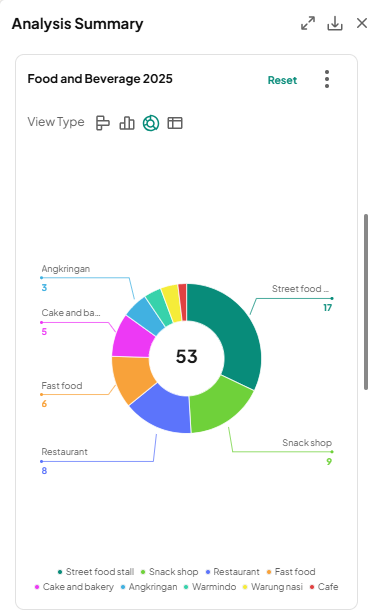
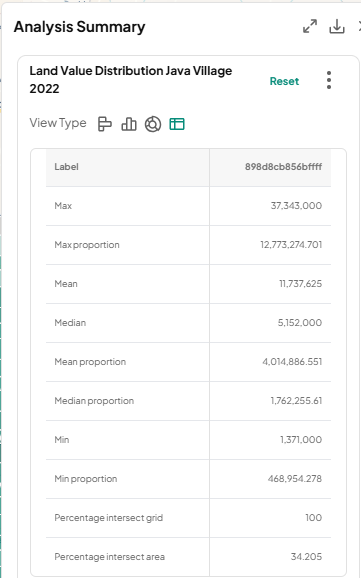
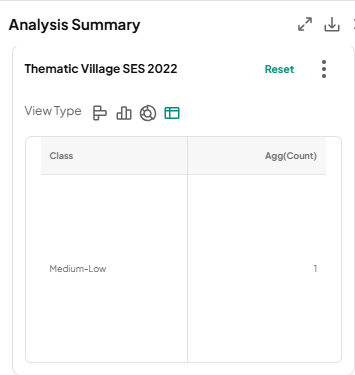
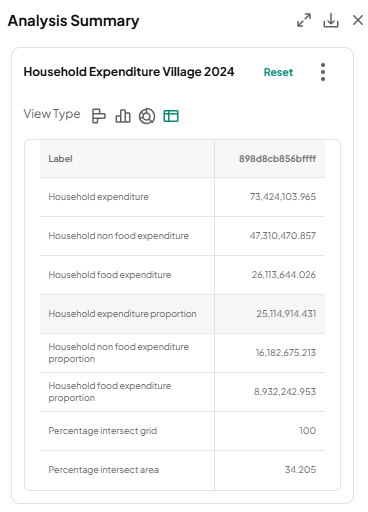
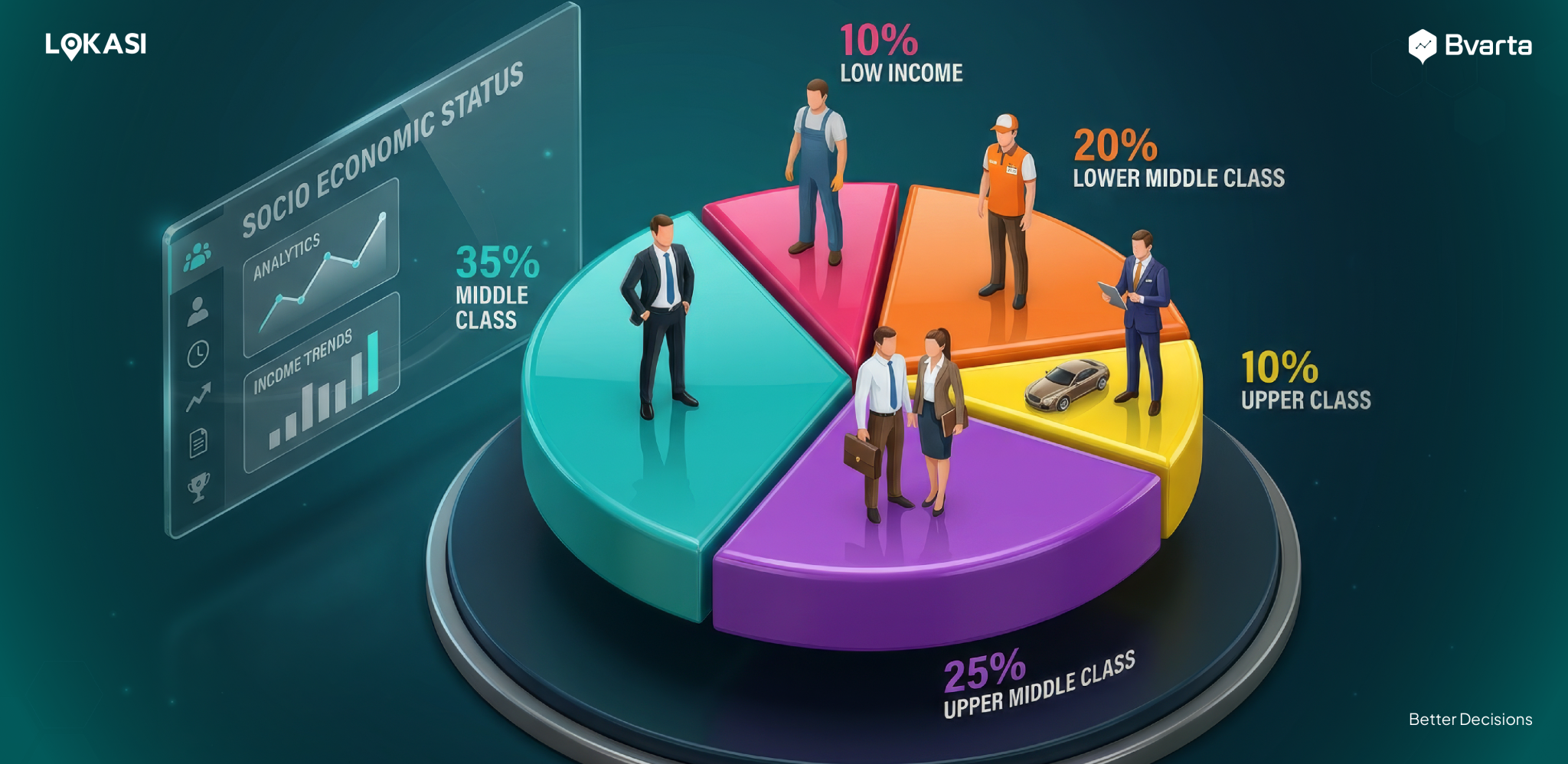
From the existing F&B business categories in the area, the socioeconomic status of the surrounding community, to the average monthly household expenditure, all of this information is presented in a single, complete, and well-structured view that can be used as a direct basis for decision-making.
With this level of data, businesses no longer need to guess. Every location decision can be grounded in real, measurable facts rather than assumptions or gut feelings.
Want to find the best location for your business?
Get a free consultation with us at: [email protected] or WhatsApp: 0877 7907 7750
FAQ
How do you choose a strategic location for a business?
Choosing a strategic business location starts with understanding your business model, whether you are running a B2B or B2C operation. From there, analyze the target market and demographics of the area to ensure the existing consumer base matches your ideal customer profile, and map out your competitors to assess whether the market is still open or already too saturated.
What type of business is suitable for a quiet location?
Businesses that are well-suited for quieter locations are typically those operating in the B2B space, such as wholesale businesses. This is because being in a busy area would interfere with their loading and unloading activities, which require space and easy access for large vehicles.
Why should we choose a strategic location?
A strategic location is important because B2C businesses depend heavily on how easily they can be found and accessed. B2C customers often make spontaneous purchase decisions — they spot your store while passing by, get curious, and walk in. Without sufficient visibility, that moment never happens.