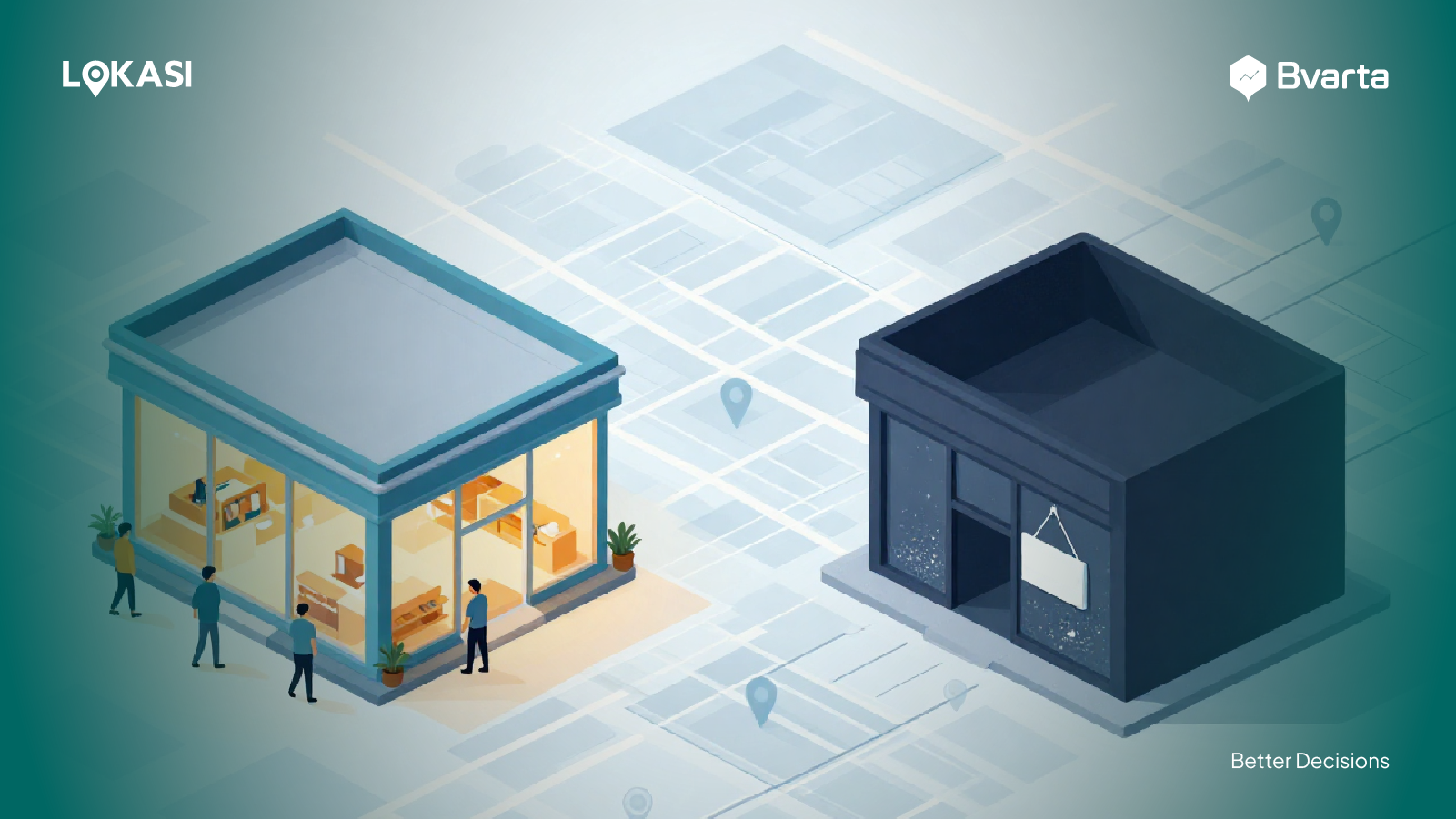

A new store opens with a ribbon-cutting and a line out the door. Eighteen months later, the same unit sits empty, the lease is gone, and the fit-out budget never came back.
This pattern shows up across the retail industry more often than most leadership teams want to admit. The frustrating part is that the warning signs were usually visible before the lease was even signed.
This article breaks down the site selection mistakes that quietly cost retail brands the most money, and how location intelligence helps catch them before they turn into a write-off.
Contents
Why Site Selection Mistakes Are So Costly
A single store decision is rarely just rent. It comes bundled with a multi-year lease, fit-out costs, hiring, training, marketing, and the opportunity cost of capital that could have gone to a better location instead.
When the location is wrong, none of that spending disappears. It simply stops generating a return. Research on r on retail site failures backs this up: businesses that choose the wrong location often see revenue decline within the first year of opening, and the gap rarely closes on its own (Lu et al., 2024).
For a brand running dozens of locations, one bad site selection doesn’t just hurt that store. It distorts the read on the entire network, making it harder to tell whether a struggling branch has a location problem or a management problem.
Common Mistakes Retailers Make
Most expensive site mistakes fall into a handful of repeatable patterns:
- Chasing foot traffic without checking fit: a busy street does not guarantee the right crowd is walking past. High pedestrian volume in the wrong demographic segment converts poorly no matter how visible the storefront is.
- Ignoring competitor saturation: opening in an area already dense with similar offerings means fighting for the same limited demand instead of capturing new demand.
- Relying on instinct over data: site visits and gut feel still drive a surprising number of expansion decisions, even when the brand has access to demographic and mobility data.
- Copying a winning format into the wrong area: a store layout and price point that works in one socioeconomic profile can underperform badly when dropped into a different one.
- Underestimating cannibalization: opening too close to an existing branch can quietly pull sales away from a store that was already performing well.
How Location Intelligence Prevents These Mistakes
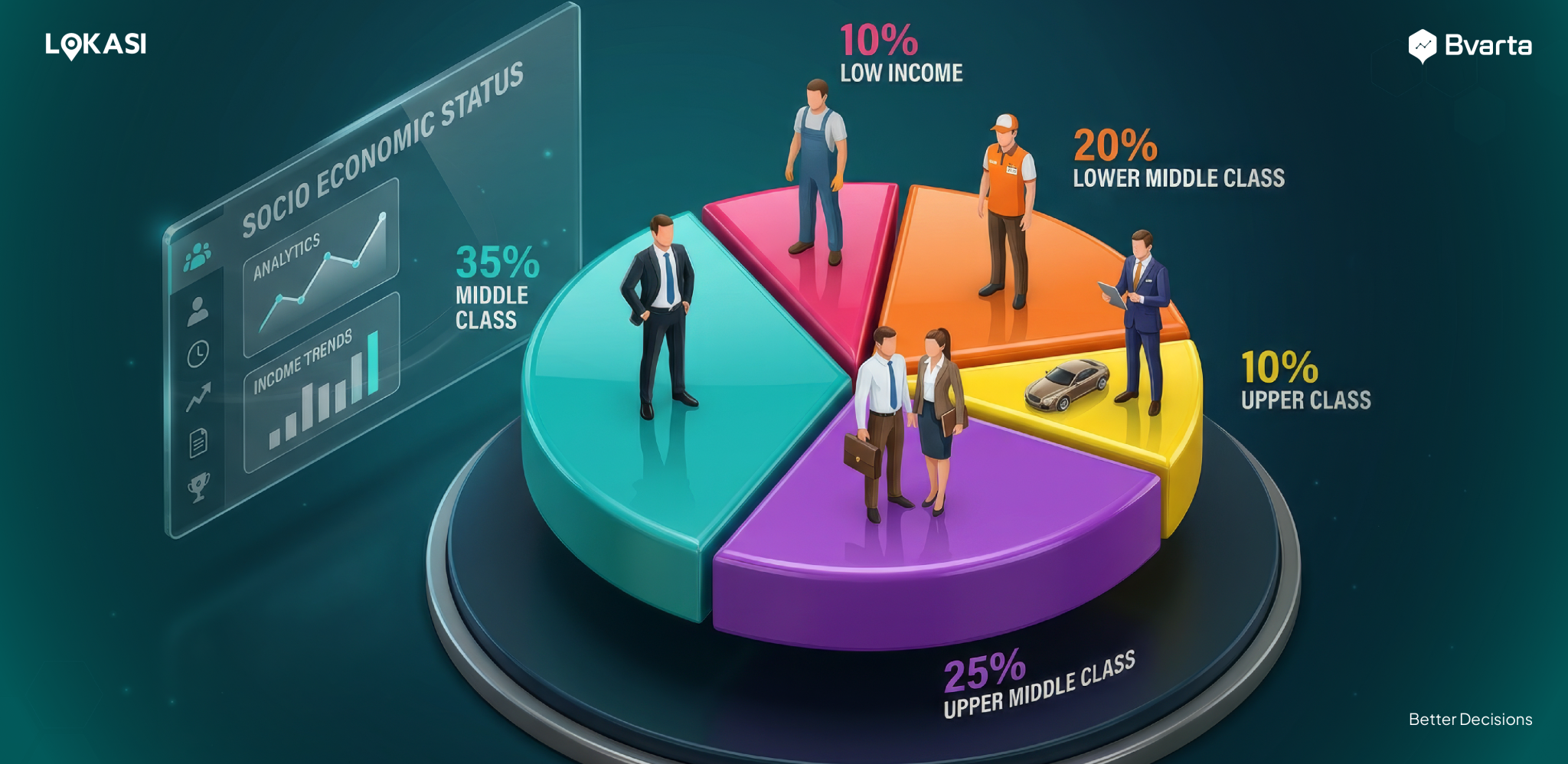
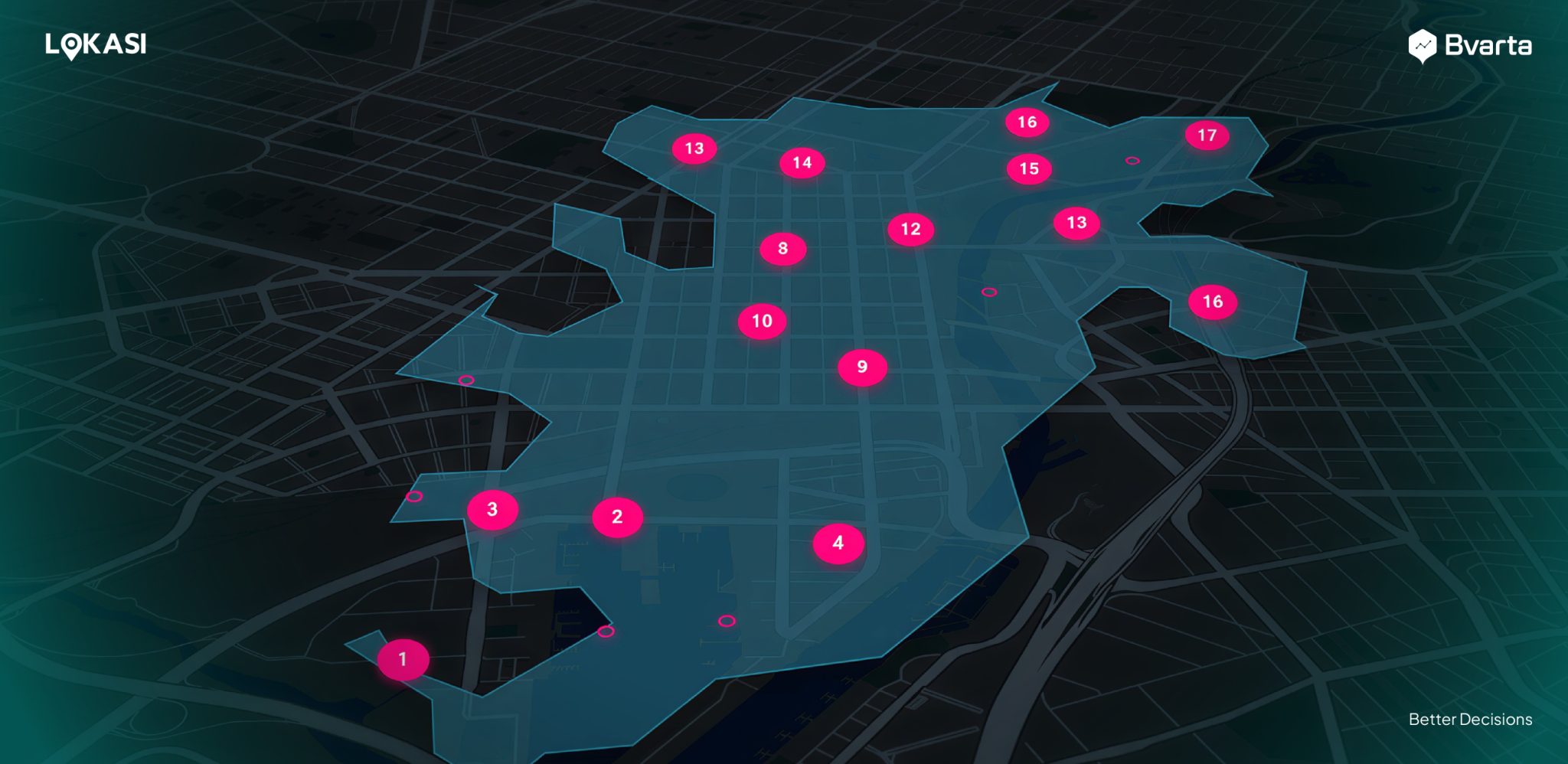
Location intelligence platforms like LOKASI Intelligence address these mistakes by replacing assumptions with layered data. A proper trade area analysis combines socioeconomic status (SES) data, real mobility patterns, and competitor points of interest (POI) treated as a negative parameter: the more competitor density in an area, the lower its score as a candidate site.
The output is a hexagonal grid covering the analyzed area, where darker cells indicate the strongest primary trade zones. This gives retail teams a visual, comparable way to rank candidate sites before any lease is signed, rather than relying on a single site visit or a demographic snapshot.
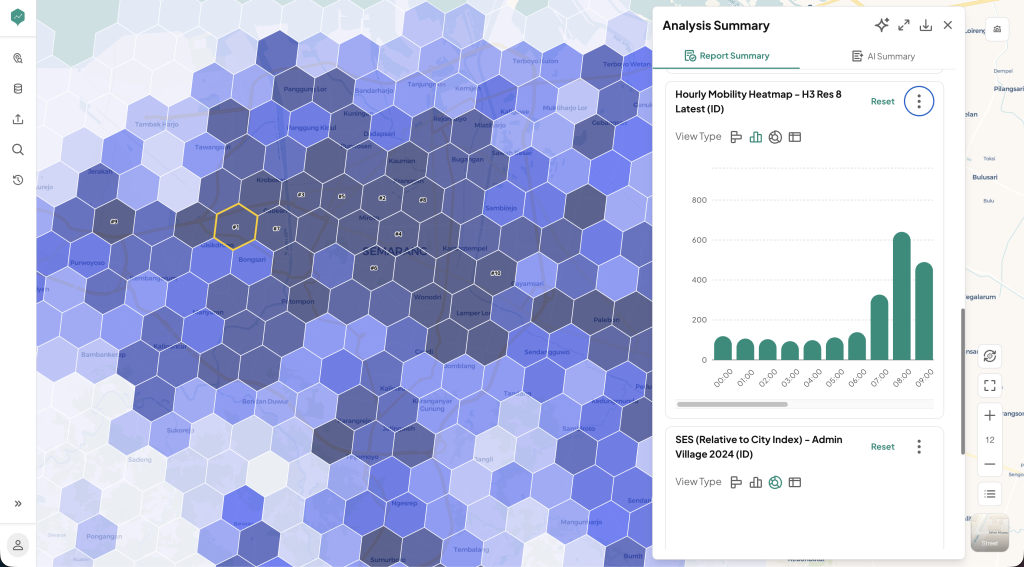 Figure 1: LOKASI Intelligence hexagonal grid trade area heatmap
Improve Your Site Selection With LOKASI Intelligence
Every expansion decision carries risk, but the size of that risk is something retailers can actually control. LOKASI Intelligence combines mobility data, SES classification, and competitor mapping into a single trade area view, so the decision to open a new branch is backed by evidence instead of instinct.
Get a clearer read on your next location before you sign anything. Reach out for a free consultation via WhatsApp at 0877 7907 7750 or through bvarta.com/contact-us.
FAQ
What is the most common site selection mistake retailers make?
The most common mistake is choosing a location based on foot traffic or visibility alone, without checking whether the people passing by actually match the store’s target market.
How much can a bad location actually cost a retail brand?
Beyond the lease and fit-out costs, a poorly chosen location often causes revenue to decline within the first year, and underperforming stores can also pull resources and attention away from the rest of the network.
How does location intelligence reduce the risk of a bad site selection?
It replaces assumptions with layered data, combining SES classification, real mobility patterns, and competitor POI density into a single trade area analysis that ranks candidate locations before a lease is signed.
References
Xmap.ai. (2026). Understanding what makes a site a bad decision for your business. https://www.xmap.ai/blog/understanding-what-makes-a-site-a-bad-decision-for-your-business
PassBy. (2026). Site selection criteria: The 10 factors that determine whether a retail location will work. https://passby.com/blog/site-selection-criteria/
Lu, J., Zheng, X., Nervino, E., Li, Y., Xu, Z., & Xu, Y. (2024). Retail store location screening: A machine learning-based approach. Journal of Retailing and Consumer Services, 77, 103620. https://doi.org/10.1016/j.jretconser.2023.103620