
Contents
What Is Meant by Competitor Analysis?
According to Zahra and Chaples (1993) in their book Blind Spots in Competitive Analysis, competitor analysis is a systematic process through which a business defines and understands its position in the market. This process goes beyond simply identifying who the competitors are. It also involves gaining deeper insight into how they operate and how they compete. In conducting this analysis, a company needs to map out its main competitors, both direct and indirect. The business should then evaluate each competitor’s strengths and weaknesses, including their products, pricing, location, marketing strategy, and service advantages. Ultimately, the goal of competitor analysis is to anticipate competitors’ potential future moves. By understanding their strategic patterns, companies can take proactive steps, minimize blind spots in decision-making, and develop more adaptive and competitive strategies.How to Conduct Competitor Analysis with Location Intelligence
Location Intelligence is a technology that uses geospatial data to generate location-based insights. It adds geographic context to business data, allowing companies to see not only numbers but also where certain patterns occur and how the characteristics of an area influence business performance. Through Location Intelligence, various types of data, such as demographics, mobile-based population movement, points of interest, and other supporting datasets, are collected and analyzed. This data is then visualized in interactive digital maps, making it easier for businesses to clearly understand patterns, trends, and the potential of a specific area. In the context of competitor analysis, Location Intelligence enables businesses to conduct more in-depth evaluations. Companies can view the distribution of competitors around a targeted location, calculate how many operate within a certain radius, such as 1 km, and identify whether they are direct or indirect competitors. Based on this analysis, businesses can make more strategic decisions. If an area is already crowded with competitors, the level of competition increases and market potential may be fragmented. On the other hand, if the number of competitors is still relatively low and market indicators show strong potential, the area may present a promising opportunity for expansion or opening new branches.Competitor Analysis Example
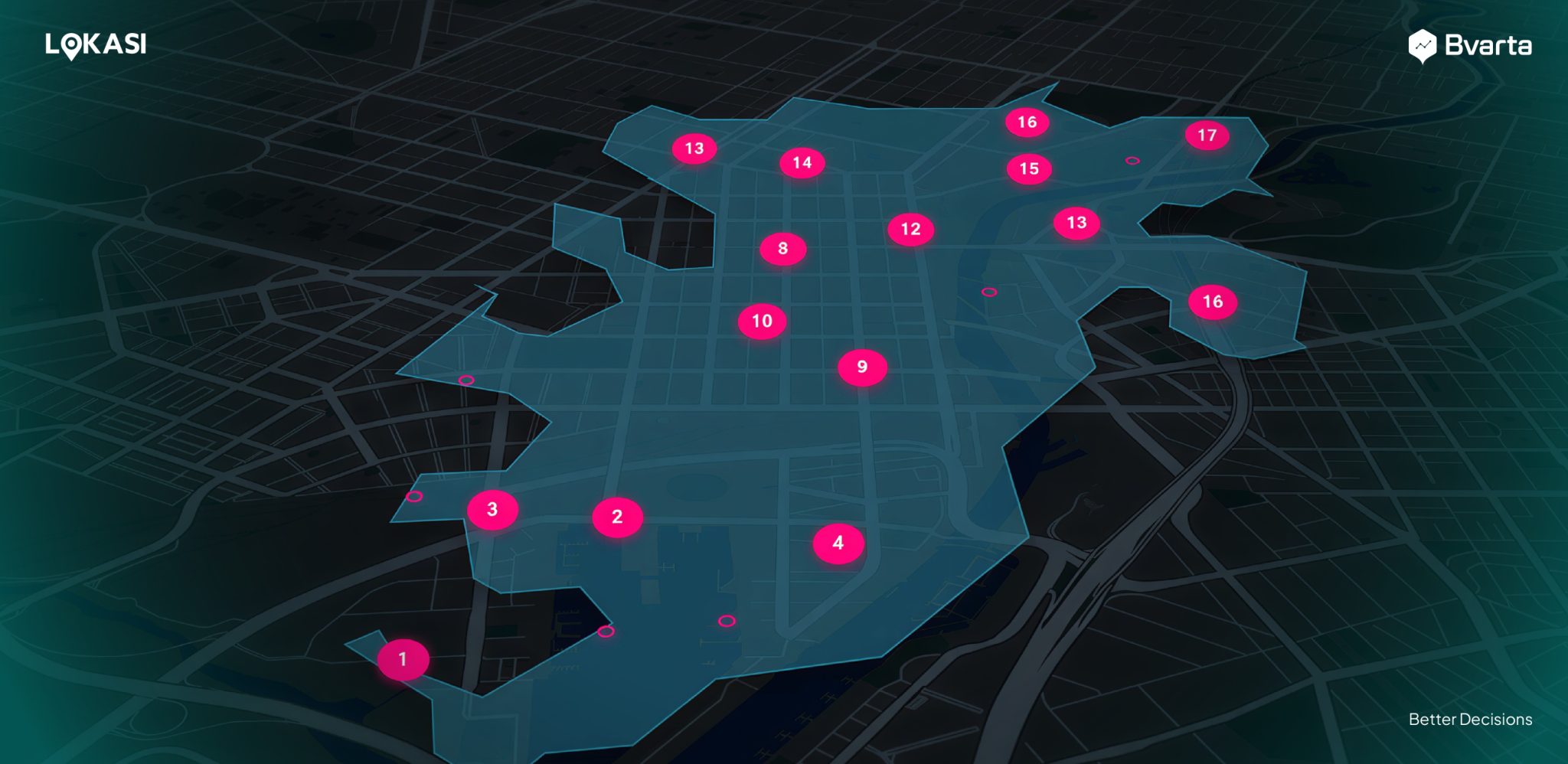
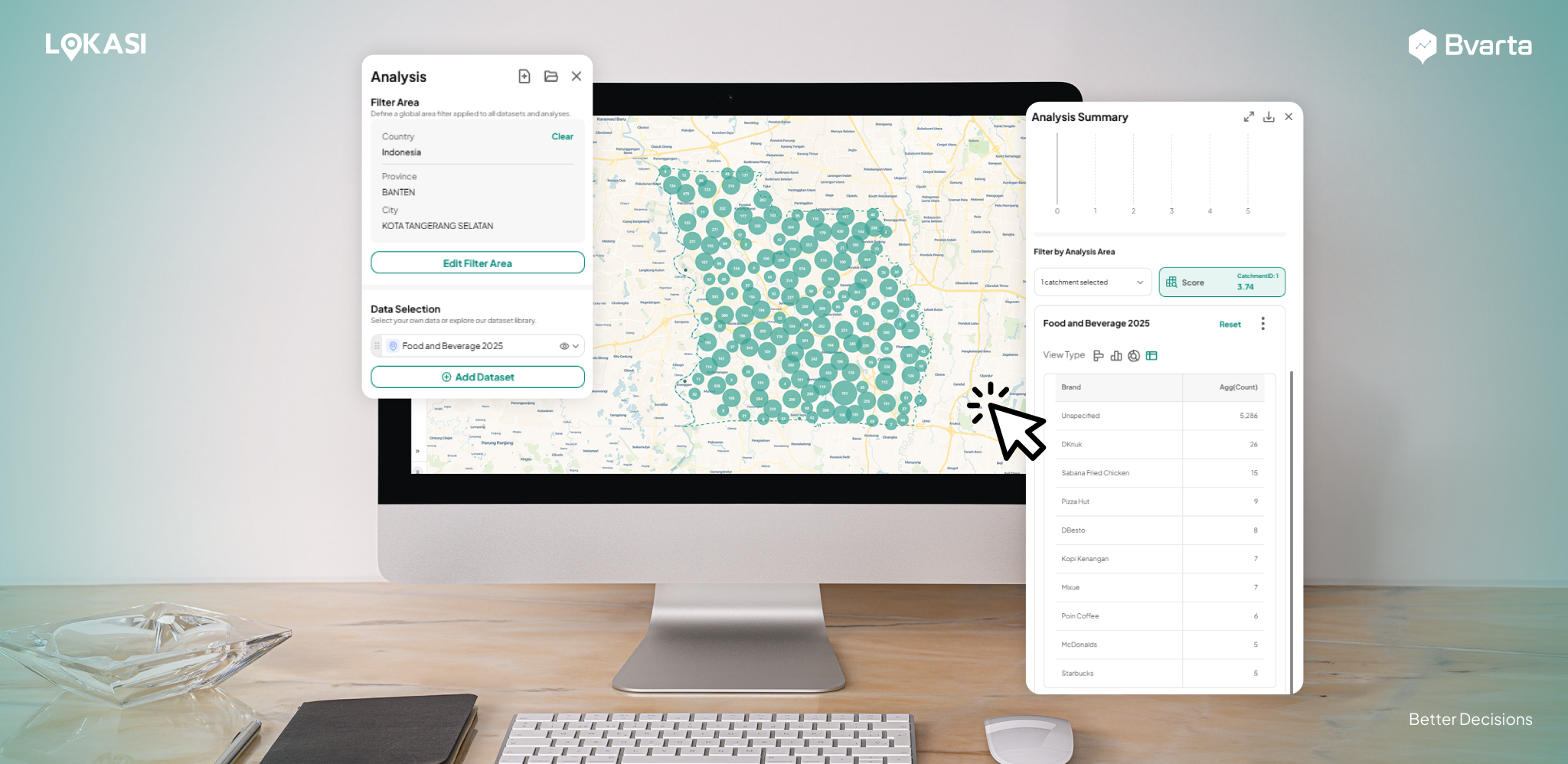
This example provides a clearer illustration of how Location Intelligence can be used to assess the level of competition in a specific area. In this simulation, we use the LOKASI Intelligence platform, a geospatial analysis tool powered by Location Intelligence and enriched with various types of location-based data. The platform allows users to select a specific area, choose the business category they want to analyze, and view the results through an easy-to-understand interactive map. The first step is to define the boundaries of the area to be analyzed. After that, we select a point of interest category, in this case, food and beverage. The system then processes the data and displays the distribution of all registered culinary businesses within the selected area.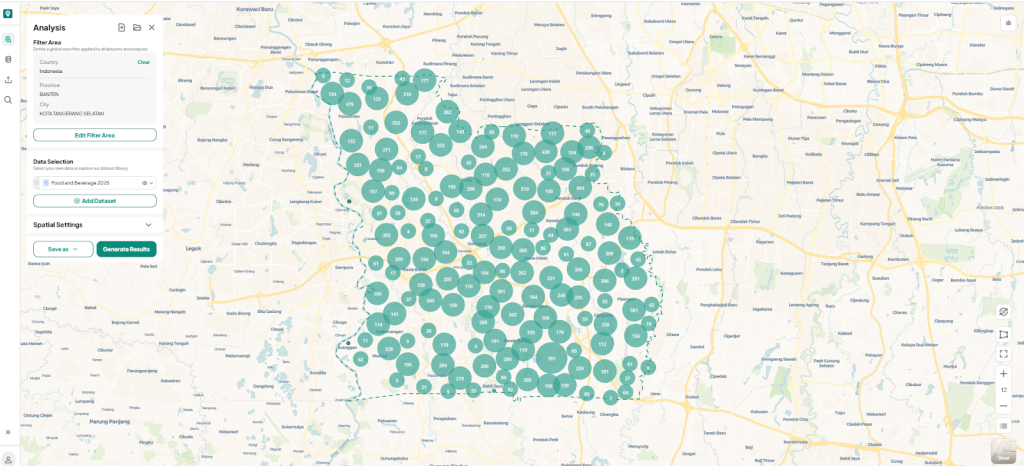 Based on the image above, we can see the number of food and beverage businesses distributed across different locations within the analyzed area. Each point on the map represents one or more businesses, allowing us to quickly understand the density level in each area.
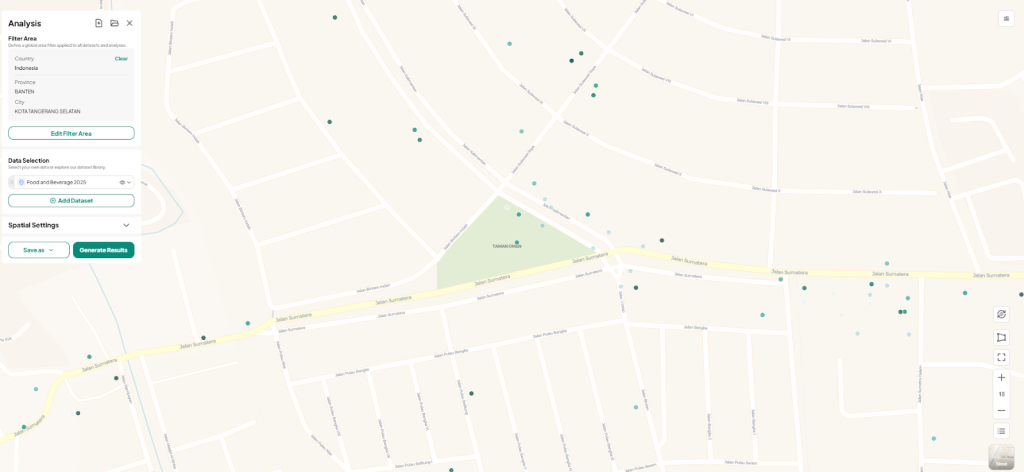 We can also analyze the distribution patterns to identify which areas are highly concentrated with culinary businesses and which are relatively less crowded.
If the dots are clustered in a particular area, it indicates a high level of competition there. Conversely, if the dots are more spread out, it may suggest that there are still opportunities to enter the market without facing intense competition.
We can also analyze the distribution patterns to identify which areas are highly concentrated with culinary businesses and which are relatively less crowded.
If the dots are clustered in a particular area, it indicates a high level of competition there. Conversely, if the dots are more spread out, it may suggest that there are still opportunities to enter the market without facing intense competition.
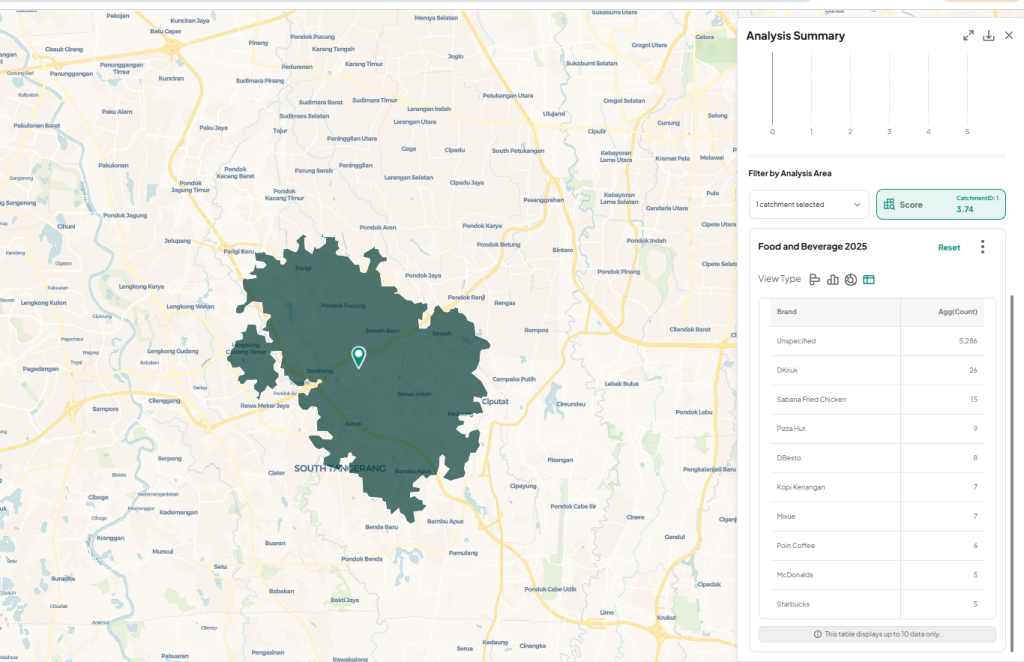 In addition to reviewing the number and distribution of businesses, companies can also identify which food and beverage brands are already operating in the selected location, as shown in the image above.
This information is essential for understanding the existing players in the area, whether the market is dominated by large brands, franchise chains, or local businesses.
With these insights, businesses can evaluate the strength of their competitors and develop a more suitable strategy before deciding to open in that location.
Interested in finding out whether your target location still offers opportunities or is already saturated?
Contact us today via email at [email protected] or through WhatsApp at 0877 7907 7750 to receive a comprehensive location analysis report.
In addition to reviewing the number and distribution of businesses, companies can also identify which food and beverage brands are already operating in the selected location, as shown in the image above.
This information is essential for understanding the existing players in the area, whether the market is dominated by large brands, franchise chains, or local businesses.
With these insights, businesses can evaluate the strength of their competitors and develop a more suitable strategy before deciding to open in that location.
Interested in finding out whether your target location still offers opportunities or is already saturated?
Contact us today via email at [email protected] or through WhatsApp at 0877 7907 7750 to receive a comprehensive location analysis report.