3 Ways Digital Transformation Boosts Business Productivity

3 Ways Digital Transformation Boosts Business Productivity

Digital transformation brings a lot of real benefits to businesses, especially when it’s done the right way. It doesn’t just make daily operations run smoother and more efficiently, but it also helps boost overall productivity in a big way.   In this article, we’ll break down three simple ways digital transformation can help your business work smarter, move faster, and get better results.  

Business Process Simplification

The first way digital transformation maximizes business productivity is by simplifying workflows. Before digitalization, many businesses still relied on manual processes such as searching for and processing data manually, cleaning it, and then inputting it into Excel one entry at a time. These tasks were time-consuming and labor-intensive, yet their contribution to overall productivity was relatively low.   With digital transformation, these processes can be significantly streamlined. Businesses can automate repetitive tasks, reduce the risk of human error through more structured systems, and speed up access to relevant, real-time data.   In addition, integrating various digital tools into daily operations helps make workflows more efficient and measurable, while also supporting faster and more accurate decision-making. This allows teams to focus on strategic work that delivers greater value and drives business growth.  

Automating Routine Tasks

Every business has tasks that must be performed repeatedly on a daily basis. Although they may seem simple, these routine activities often consume a significant amount of time and effort when handled manually. Common examples include data entry, generating periodic reports, and responding to standard customer service inquiries.   Digital transformation allows these repetitive tasks to be automated. This leads to greater productivity and more consistent data quality. Technologies such as Artificial Intelligence (AI) and Machine Learning enable systems to operate independently without constant human input.   For instance, AI can help businesses save time by automatically generating reports, creating data visualizations, and summarizing key information into easy-to-digest formats. This eliminates the need for manual compilation, making workflows faster, more practical, and more efficient.   AI can also enhance customer service by automatically handling frequently asked questions, providing relevant information, and resolving simple issues. This reduces the need for direct involvement from a customer service representative.   As a result, customers benefit from faster and more responsive support. At the same time, teams can focus on resolving more complex and high-priority cases.  

Enabling Smarter, Data-Based Business Decisions

Before adopting digital transformation, many businesses made decisions based on personal experience, intuition, or fragmented, unintegrated data.   This approach carries significant risk, as decisions may not accurately reflect real conditions on the ground. Incomplete or inaccurate data increases the likelihood of strategic missteps.   Digital transformation allows businesses to access and manage large volumes of data more quickly and efficiently. It enables companies to collect, process, and analyze data from multiple sources in a structured and timely manner.   With the help of data analytics tools, businesses can uncover performance patterns, gain deeper insights into consumer behavior, monitor market trends, track competitor activity, and adapt their strategies with greater agility and precision.   Furthermore, digital transformation helps boost productivity in the decision-making process through advanced forecasting capabilities. With accurate data, businesses can anticipate demand spikes and proactively prepare product or raw material inventories. This is essential to avoid stock shortages during peak periods.   In addition, digital transformation supports more targeted resource allocation. Backed by data, companies can strategically prioritize the use of labor, budget, and time, ensuring that every decision is based on reliable insights and contributes directly to business efficiency and growth.  

Make More Informed Business Decisions with LOKASI Intelligence

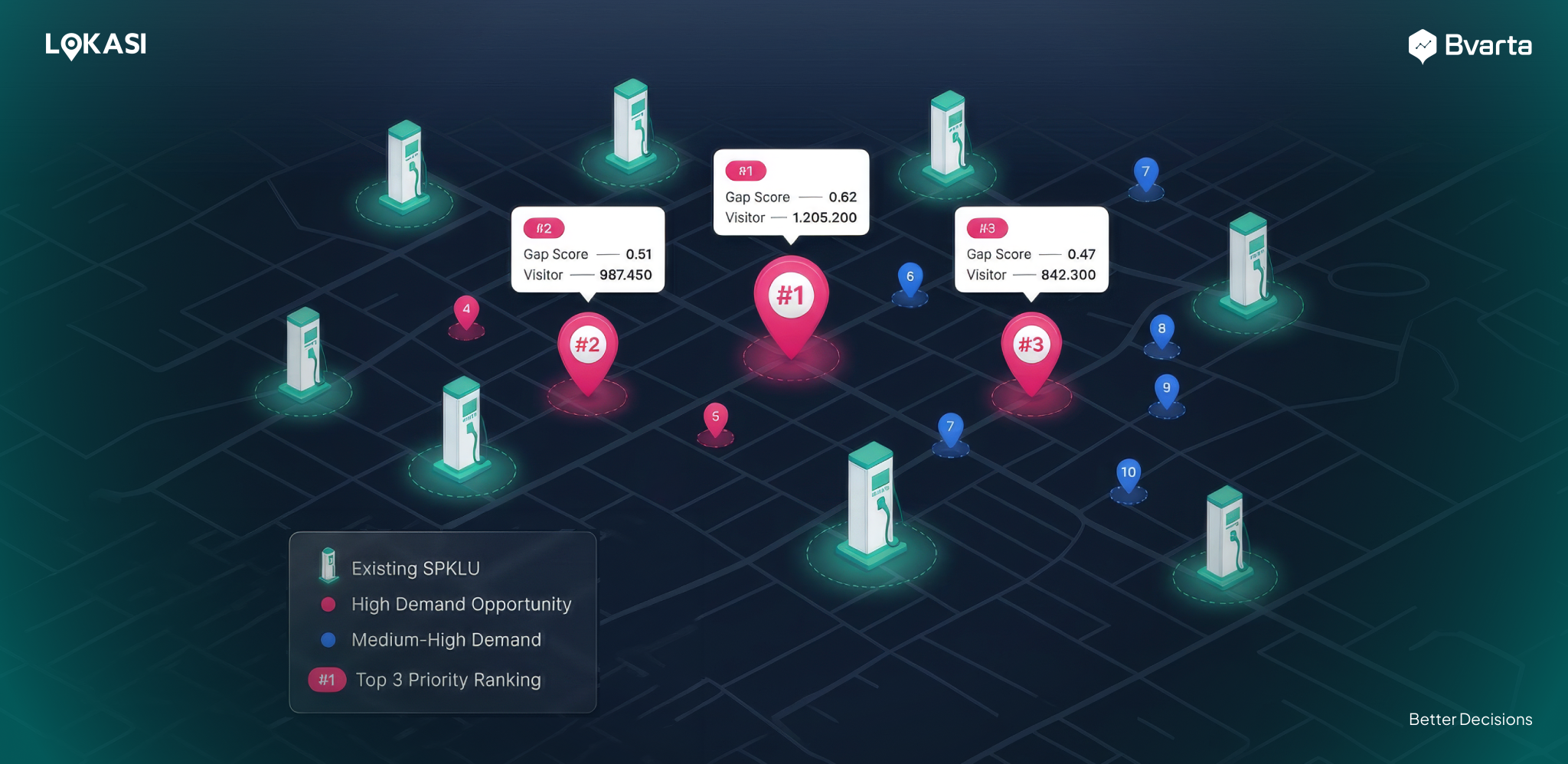
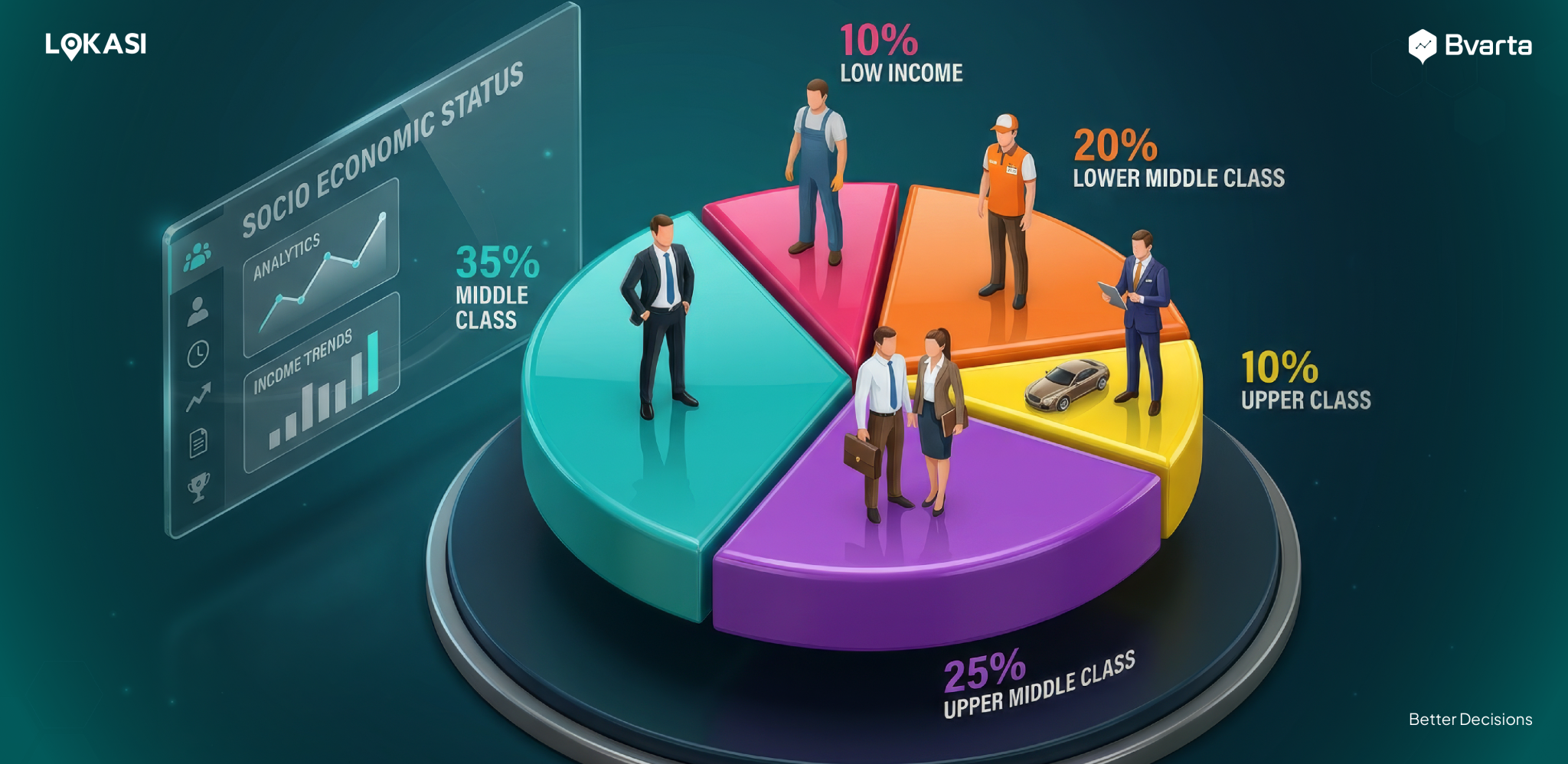
LOKASI Intelligence is a geospatial analytics platform that integrates location intelligence technology with comprehensive, ready-to-use location data. It is designed to help businesses automatically identify and analyze potential locations. This eliminates the need to manually search for data or conduct site surveys one by one.   With LOKASI, finding the best location becomes significantly faster and more efficient. All essential information, such as demographics, foot traffic, and competitor presence, is available in one easy-to-understand dashboard.   LOKASI also simplifies the reporting process. Users can instantly generate analytical reports and download them in various formats such as Excel or CSV. This makes documentation, presentations, and decision-making easier and more efficient. With LOKASI, businesses can confidently take data-driven strategic actions.   Learn how LOKASI Intelligence can support your business by contacting us at: [email protected] or WhatsApp: 0877 7907 7750  

FAQ


How does digital transformation affect productivity and competitiveness?

Digital transformation enhances business productivity and competitiveness by streamlining operational processes, automating routine tasks that were previously time-consuming, and enabling businesses to make more accurate decisions based on real-time, relevant data. These improvements lead to greater efficiency and stronger competitive advantage.  

How does digital transformation influence business development strategies?

Digital transformation influences business development strategies by allowing companies to collect and analyze large volumes of data. Insights from this analysis enable businesses to make data-driven decisions that align with actual market conditions, helping them adjust their development strategies more precisely and responsively.  

How can technology resources be used to improve business efficiency and productivity?

Technology resources can improve efficiency and productivity by simplifying workflows, automating repetitive tasks, and supporting smarter, faster decision-making.
Related Posts