Boost Your Sales Performance with Smart Location Analysis

Boost Your Sales Performance with Smart Location Analysis

Sales performance plays a big role in shaping a company’s success. That’s because how well the sales team performs has a direct impact on revenue, business growth, and how competitive the company is in the market.   To improve sales performance, companies need to keep up with technology and make the most of the data they have. One method that’s becoming more popular is location analysis.   But how exactly does location analysis help boost sales performance? Let’s break it down in this article.  

Understanding Sales Performance and Location Analysis

Before we dive deeper, let’s get a clear idea of what sales performance and location analysis actually mean.   Sales performance refers to how effectively a sales team or individual achieves business targets and objectives within a specific time period. To measure this, companies typically use several Key Performance Indicators (KPIs), such as total revenue generated, conversion rate, number of new customers acquired, and the number of completed transactions (closing deals).   To ensure that this performance assessment is truly accurate, businesses need to consistently track and analyze relevant data. This helps ensure that the targets set for the sales team are clear, measurable, and free from bias.   On the other hand, location analysis is the process of evaluating various spatial aspects of a specific area or location to determine its suitability for a particular business purpose, such as market expansion, opening new branches, or developing targeted sales strategies.   This type of analysis goes beyond simply identifying geographic coordinates. It also takes into account a range of supporting factors, including consumer behavior in the area, local market trends, competitor presence, visitor traffic (foot traffic), demographic profiles of the surrounding community, and the region’s economic conditions.  

4 Ways to Analyze Locations to Improve Sales Performance

  After understanding the concepts of sales performance and location analysis, it’s time to explore how the two are connected, especially when it comes to improving sales results and overall performance.  

Improving Marketing Effectiveness Through Consumer Insights

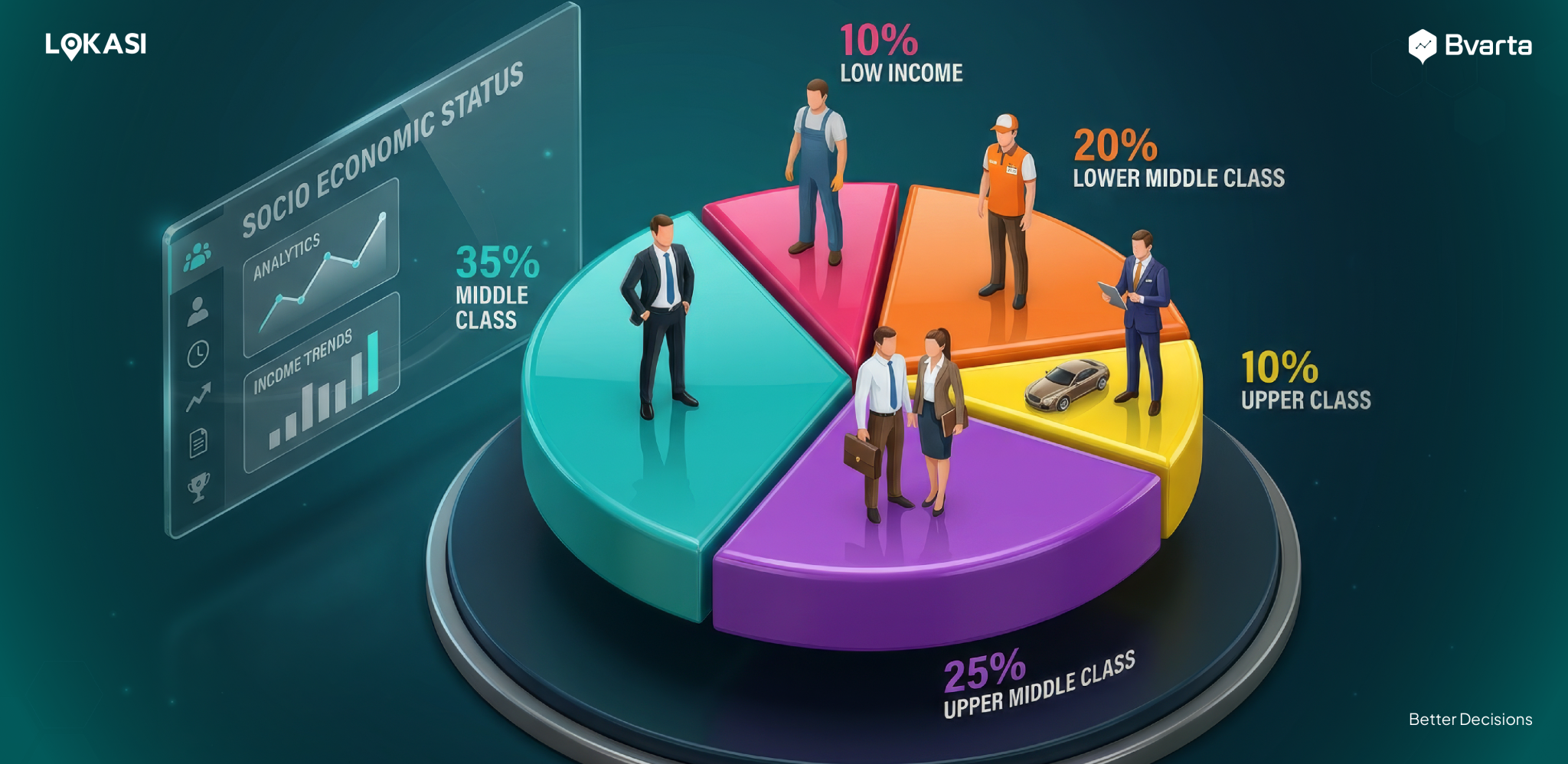
One of the first ways businesses can enhance their marketing and sales performance is by leveraging insights gained from a deep understanding of consumer behavior. The more a business understands who its target customers are, where they’re located, and how they behave, the more accurately it can craft effective strategies.   With the help of location data, businesses can gather key information such as where consumers are active, their demographic profiles, occupations, interests, preferences, and how much time they spend in certain places. This data is then analyzed to uncover behavioral patterns, which can be used to create more targeted and impactful marketing and sales strategies.  

Helping to Create Benchmarks

Sales benchmarks are one of the key elements in the business world. Their primary function is to evaluate and improve overall sales performance. With benchmarks in place, businesses have clear standards for comparison, enabling them to measure the effectiveness of current strategies, identify the strengths and weaknesses of the sales team, set realistic targets, and drive sustainable sales growth.   In this context, location analysis can serve as a highly effective tool. It allows businesses to compare sales performance across different areas, such as between individual stores, operational zones, or even cities.   By accessing location-based sales data, businesses can easily identify which areas are performing well and which ones are underperforming.   Moreover, location analysis helps businesses understand the factors influencing sales performance in each area. These factors may include the demographic characteristics of local consumers, the intensity of competition, or even consumer behavior patterns specific to the region.   Armed with these insights, businesses can adjust their sales strategies in underperforming areas—whether by refining their marketing messages, improving promotions, or optimizing distribution methods. They can also identify other areas with similar characteristics to their top-performing regions, opening up new opportunities for expansion and success.  

Targeting High-Potential Areas

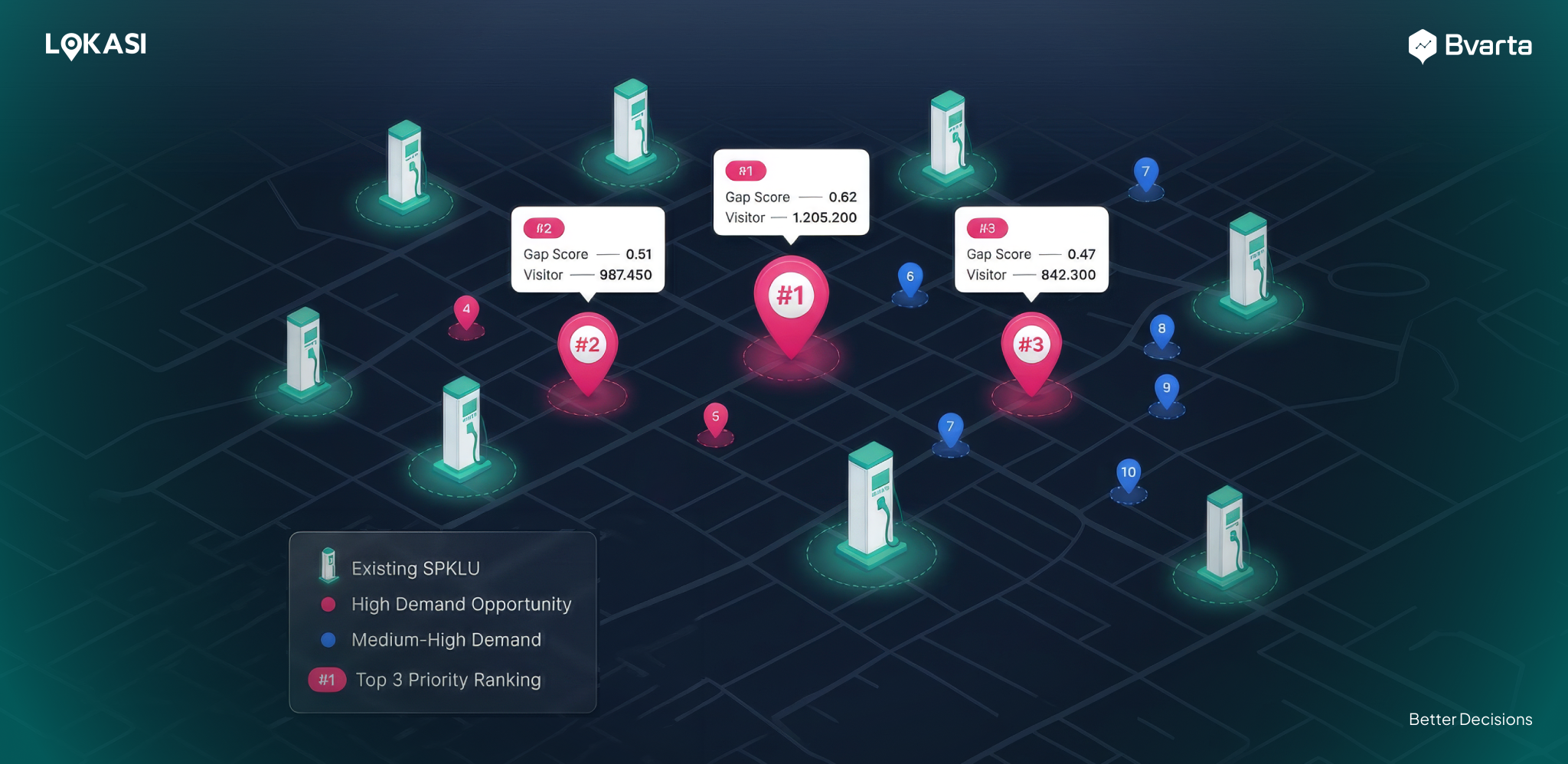
Location Intelligence and location analysis are two powerful tools that help businesses identify and select the most strategic locations for business development. These approaches allow companies to go beyond simply viewing locations on a map, they enable a deeper understanding of the market potential and dynamics within a given area.   By leveraging Location Intelligence, businesses can pinpoint areas with high potential, based on key factors such as foot traffic, demographic profiles that align with their target market, the presence of strategic Points of Interest (POI) like shopping centers, offices, or schools, as well as the level of competition in that region.   Analyzing this data helps businesses identify locations that are not just crowded, but strategically valuable, places with strong potential to boost visibility, attract more prospective customers, and ultimately drive higher sales.   In addition, Location Intelligence can also assist in identifying areas with opportunities for strategic partnerships, such as zones surrounded by complementary businesses or established industry ecosystems, further enhancing business growth potential.  

More Efficient and Effective

By using Location Intelligence, businesses can gain better visibility into whether there are other potential targets located near the areas already scheduled for sales visits. This information is highly valuable for optimizing sales routes, allowing each sales activity to become more efficient, focused, and productive.   Additionally, Location Intelligence enables businesses to analyze whether the territories or visit areas assigned to different sales representatives are overlapping. If overlaps are identified, companies can quickly adjust the coverage areas to prevent duplicate visits, which could otherwise lead to wasted time, effort, and resources.   With this level of precise, data-driven mapping, businesses can ensure that each member of the sales team is assigned a clearly defined territory, reducing the risk of territorial conflicts and enabling sales reps to work more effectively in targeting potential customers across different locations.   Optimize Sales Performance with LOKASI Targetin LOKASI Targetin is a geospatial analytics platform integrated with complete, accurate location data. This solution is designed to help businesses gain a comprehensive understanding of field conditions and make data-driven decisions with greater confidence.   With LOKASI Targetin, businesses can track field sales activities, monitor which areas have or haven’t been visited, and ensure the overall effectiveness of sales operations in the field. Beyond that, the platform also enables performance comparison across different regions, helping businesses easily identify high-potential areas as well as locations that require more attention.   The area mapping feature in LOKASI Targetin helps companies distribute sales territories more fairly and efficiently, prevent overlap between team members, and boost overall productivity.   Additionally, businesses can gain deeper insights into consumer characteristics in each region—from demographic profiles and visiting behavior to local preferences—allowing marketing strategies and sales approaches to be more personalized and targeted.   Discover how Location Intelligence can empower your business. Contact us via: 📧 Email: [email protected] 📱 WhatsApp: 0877 7907 7750  

FAQ

What is KPI in sales?

KPI, or Key Performance Indicator, in sales refers to a metric used to assess how effectively a sales team or individual is achieving the targets and goals set by the company. These indicators help businesses evaluate performance and make informed decisions to improve sales outcomes.  

What is SPM in sales?

Sales Performance Management (SPM) is a structured and systematic method used to plan, monitor, and enhance the performance of a sales team. It ensures that every sales activity aligns with business objectives and contributes to overall growth.  

How does location analysis help optimize sales performance?

Location analysis supports sales performance optimization by providing data-driven insights into consumer behavior, identifying market opportunities, and enabling more strategic decision-making. It allows businesses to better understand which areas are performing well, where improvements are needed, and how to allocate resources more efficiently for maximum impact.  
Related Posts