The Role of Strategic Location in Boosting Your Business Competitiveness

The Role of Strategic Location in Boosting Your Business Competitiveness

You’ve probably heard the phrase “location is everything”,and honestly, it’s not just some business buzzword. Where you choose to set up shop can seriously shape your business’s success. The right location can help your business grow fast, while the wrong one can make things a lot harder.   That’s why so many business owners put a lot of thought into finding the “perfect” spot. But what does a strategic location actually mean? Is a busy place always a good choice? And how is it different from just a regular location?   We’ll break down all of that in this article. Keep reading to get a clearer picture of what makes a location truly strategic for your business.  

What is a Strategic Location?

A strategic location is a place that is highly sought after by retail or franchise businesses because it’s considered to have strong potential to attract customers. These locations are typically in areas that make it easy for businesses to reach and draw in potential customers directly to their physical stores.   Several key factors determine whether a location is considered strategic:  
  • Accessibility: How easy it is for customers to reach the location, whether by private vehicle or public transportation.
  • Visibility: How noticeable or easy to see the business is to people passing by the area.
  • Foot Traffic Density: The number of people passing by the location—higher foot traffic usually means a greater chance of attracting customers.
  However, a strategic location isn’t just about being in a “busy” area. It also needs to be relevant to the target market and aligned with the type of business being run. That’s why understanding the different types of strategic locations is crucial during the business planning process.  

Types of Strategic Locations

In general, strategic locations can be divided into three main types. Here’s a detailed explanation of each:  

Strategic Location

A strategic location is an area with high accessibility, strong visibility, and dense foot traffic. These places are typically found in highly active zones such as city centers, shopping malls, or busy commercial districts.   Businesses often choose these areas because of the exposure they offer. You’ll usually find large retail chains, popular restaurants, food outlets, and various other businesses that rely on high consumer traffic operating in these locations.   Due to their strong business potential, strategic locations often come with higher rental costs compared to regular ones. The high demand and potential for significant sales are what drive up these prices.   While operating expenses in strategic areas can be costly, many business owners still prefer them, believing that the long-term benefits—especially when supported by well-targeted products and services—far outweigh the costs.  

Secondary Location

The next type is known as a secondary location—an alternative to prime strategic locations, offering similar characteristics but at a more moderate level.   Unlike strategic locations that provide high accessibility, excellent visibility, and very dense foot traffic, secondary locations still have these elements, but at a more balanced and affordable scale. In other words, they are still relatively busy, easy to access, and fairly visible—but not as crowded or costly as top-tier areas.   Geographically, secondary locations are usually not far from main activity centers or strategic zones. They may be located along supporting roads connected to the central area or in growing neighborhoods. One key trait is their lower rental cost compared to prime locations, while still offering good potential to attract customers.   This type of location is ideal for small to medium-sized businesses, newly expanding franchises, or start-ups that may not yet have the budget for premium spaces but still require a visible and accessible business location.  

Tertiary Location

The last type is the tertiary location—an area with low accessibility, poor visibility, and minimal foot traffic. These locations are typically situated far from busy centers, such as in suburban areas, industrial zones, or places that are difficult to reach by public transportation.   Due to their limited accessibility and low activity levels, tertiary locations are rarely chosen by businesses that depend on walk-in customers. However, this also makes rental costs significantly lower compared to strategic or secondary locations.   That said, tertiary locations still hold value for certain types of businesses. These areas are commonly used for purposes such as manufacturing facilities, warehouses, and logistics centers—businesses that don’t require high visibility or daily customer visits.  

How Strategic Locations Boost Business Competitiveness

Strategic locations can play a key role in helping businesses stand out and compete more effectively. Here’s how:  

High Foot Traffic

Strategic locations are typically situated in areas with high foot traffic—places where many people pass by or carry out daily activities. This steady flow of people increases the chances of businesses getting noticed, visited, and ultimately making more sales.   For businesses that rely heavily on direct customer visits—such as modern retail stores, restaurants, cafés, or franchise outlets—a high-traffic location is crucial. The more people pass through an area, the higher the chance they’ll stop by, notice the products, or make a purchase.  

Increased Consumer Exposure

A strategic location offers a significant advantage in terms of exposure to potential customers. Businesses situated in these areas have a much better chance of being seen, recognized, and remembered by people who may not have known about the brand, product, or service before.   When a business is located in a busy and easily accessible spot—like a shopping center, main road, or commercial district—it naturally gets more visibility. Even if people don’t immediately become customers, they become aware of the business’s presence.   This is why strategic locations are often seen as a long-term investment—not just for driving sales, but also for building brand image and expanding market reach.

Find Strategic Locations with LOKASI Intelligence

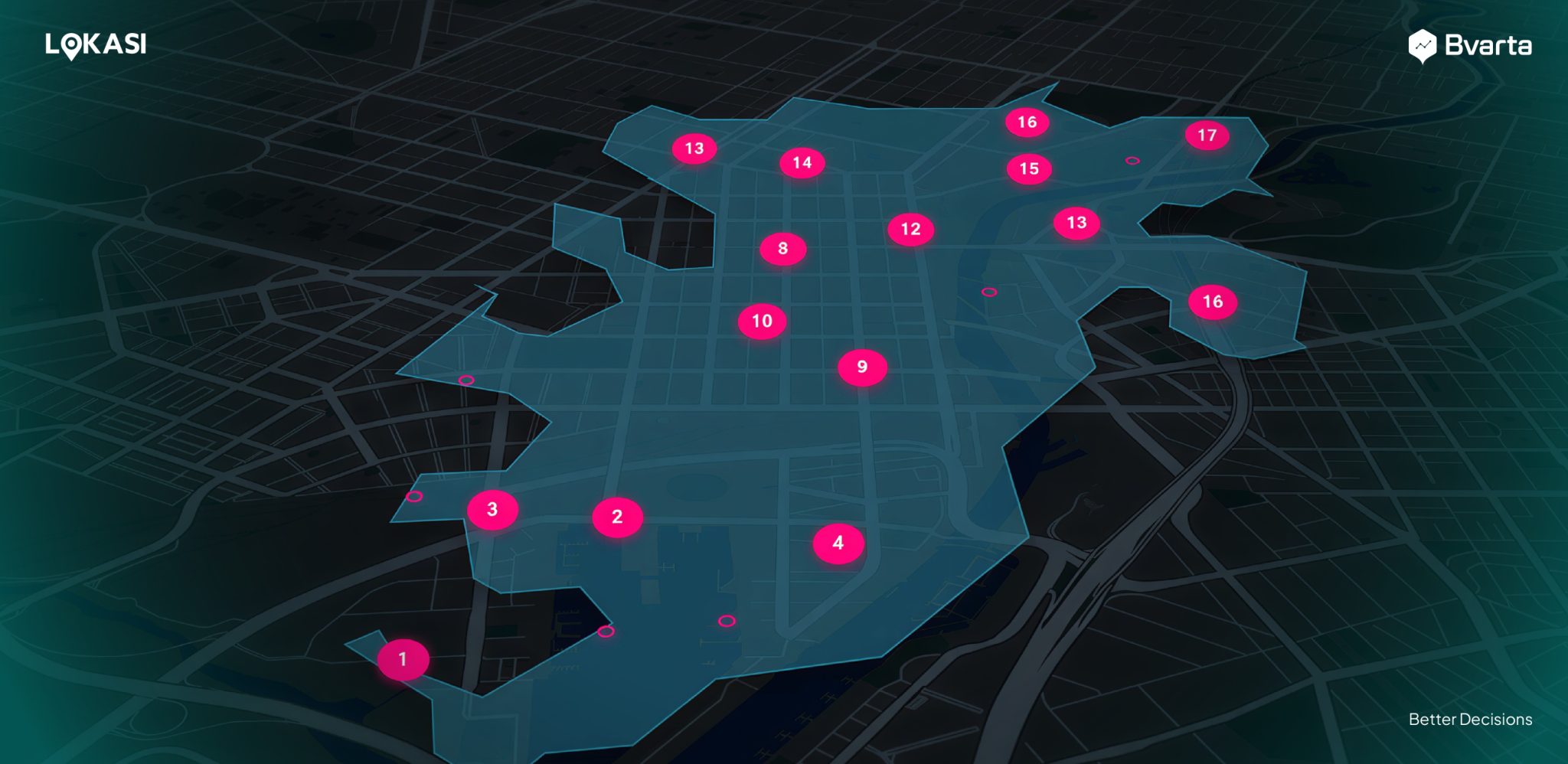
LOKASI Intelligence is a geospatial analytics platform powered by advanced location intelligence and supported by complete, accurate location data. This technology is designed to help businesses analyze locations in-depth and identify the best areas for expansion—such as opening new branches, outlets, or sales points.   With LOKASI, location scouting is no longer done manually or based on guesswork. Businesses can easily view and compare the potential of various areas using key indicators such as population, population density, accessibility, purchasing power, and surrounding competition.   Using a data-driven recommendation system, LOKASI presents location options categorized into strategic, secondary, and tertiary locations.   This allows businesses to quickly choose the location that best fits their goals and growth strategies—without the need for lengthy, expensive manual surveys.  

FAQ

What is a strategic location?

A strategic location is an area with high accessibility, strong visibility, and heavy foot traffic. It’s typically situated in places where many people pass by or gather, such as city centers, shopping malls, or busy commercial districts.  

Why is a strategic location important for businesses?

Because it increases the chances of being seen, visited, and chosen by potential customers. The more visible and accessible a business is, the higher its potential for sales and growth.  

What are examples of strategic locations for a business?

Examples include central business districts, shopping centers, main roads, and commercial areas with consistent daily activity and high pedestrian or vehicle traffic.
Related Posts