
With today’s uncertain economy, lots of people are starting their own businesses, whether it’s to earn some extra income or to build financial independence.
If you’re running an offline business, choosing the right location is super important. The spot you pick can make or break your business, it decides whether you’ll get steady customers, grow bigger, and stay in the game long-term.
So, what do we actually mean by “business location”? What kinds of locations are out there? And how do you pick a spot that really gives your business the best shot at success?
Let’s break it down!
Contents
What Is a Business Location?
A business location is the physical place or geographic area where a business operates. The choice of location is influenced by several factors, such as proximity to consumers’ residential areas, surrounding market conditions, and accessibility, including transportation and parking. These factors play a major role in shaping customer comfort, trust, and willingness to visit or make transactions.
Location is one of the most important elements when starting a business, as success is often closely tied to how strategic the location is. The right business location not only affects accessibility but also helps build the business’s image in the eyes of consumers.
For instance, if a business is too far from its target market, customers may find it inconvenient to visit and become less likely to return. On the other hand, a business located in a city center or a busy area is easier to find, draws more attention, and has a greater chance of attracting loyal, repeat customers.
Types of Business Locations
Not every location is suitable for every business, since each one has unique needs and characteristics. That’s why business owners need to understand the different types of business locations and carefully consider which option best fits their business model. Here are some common types:
Urban Locations (City Centers)
One common type of business location is the city center or urban area. These places are typically bustling hubs filled with businesses, entertainment venues, and office activity. Accessibility is usually excellent, supported by public transportation and well-developed infrastructure.
Such conditions make city centers ideal for businesses that rely on high foot traffic, such as fast food outlets, cafes, boutiques, and retail stores.
However, the advantages of high visibility and a large potential customer base come with a trade-off, rental costs in city centers are often very high. For new businesses with limited capital, this can be a major challenge.
Suburban Locations
The next type of business location is the suburban area. These locations are generally less crowded than city centers but remain easily accessible thanks to good road networks and transportation options. One of the main advantages is their more affordable rental costs, making them a great choice for new businesses that are still building capital.
In addition, suburban areas are often surrounded by residential neighborhoods, schools, or community centers, which creates steady market opportunities for businesses that cater to families and local communities.
Rural Locations
Rural areas usually offer the lowest rental costs compared to urban and suburban locations. However, they come with challenges such as limited accessibility, low visibility, and less economic activity than busier city environments.
Even so, rural locations can still be promising, especially for businesses that don’t rely heavily on large crowds or high foot traffic. Businesses focused on essential goods, community services, or local products often thrive in rural areas, where customer relationships tend to be more personal and trust-driven.
With the right strategy, a business can build strong loyalty and become an important part of rural community life.
How to Choose a Business Location
According to research by Growth Factor, 70% of consumers say that location significantly influences their decision to visit a business. This shows how crucial location is in shaping consumer perceptions, whether a business is accessible, convenient, and able to meet their needs.
A strategic location can attract more customers, while a poor choice of location can push them away. That’s why selecting a business location should never be done carelessly. Here are some key steps to finding the right spot:
Market Research
The first step in choosing a business location is conducting thorough market research. The goal is to understand local market conditions and explore the needs of potential customers in the area.
For example, by analyzing the preferences, habits, and purchasing power of the community, business owners can determine whether their target audience is present in that location. Market research also helps identify competitors, untapped opportunities, and emerging trends.
With this knowledge, businesses can ensure that their chosen location aligns with their business model while reducing the risk of failure in the future.
Consider the Level of Competition
When looking for a strategic location, especially for opening a second business, it’s important to assess the level of competition in the target area. Start by mapping out existing competitors, their locations, and the influence they have on the market.
Also, evaluate whether the area is already crowded with similar businesses, which could lead to market saturation, or if there’s still room for new entrants. This analysis helps business owners identify opportunities and create differentiation strategies, allowing them to offer something unique and more appealing than what competitors provide.
Consider Accessibility
Another key factor in choosing the right business location is accessibility. The location should be easy for potential customers to reach, whether they’re using public transportation or private vehicles. A spot near a main road, with a nearby bus stop or train station, and sufficient parking is far more attractive because it’s convenient to visit.
Good accessibility also benefits daily operations. Deliveries of raw materials can be made faster, and staff can commute more easily, ensuring smooth business activities without unnecessary delays.
Calculate Foot Traffic
Finally, it’s important to consider foot traffic, the number of people passing by your business location. For businesses that rely on crowds, such as restaurants, cafes, retail shops, or convenience stores, high foot traffic can be a crucial factor for success.
The more people who pass by, the greater the chance they’ll stop in, make a purchase, and eventually become repeat customers. In addition, locations with high foot traffic help boost brand visibility and awareness, even among those who don’t stop but simply pass by.
Examples of strategic business locations include areas near residential neighborhoods, office buildings, shopping malls, and other busy spots.
Find the Most Strategic Business Location with LOKASI Intelligence
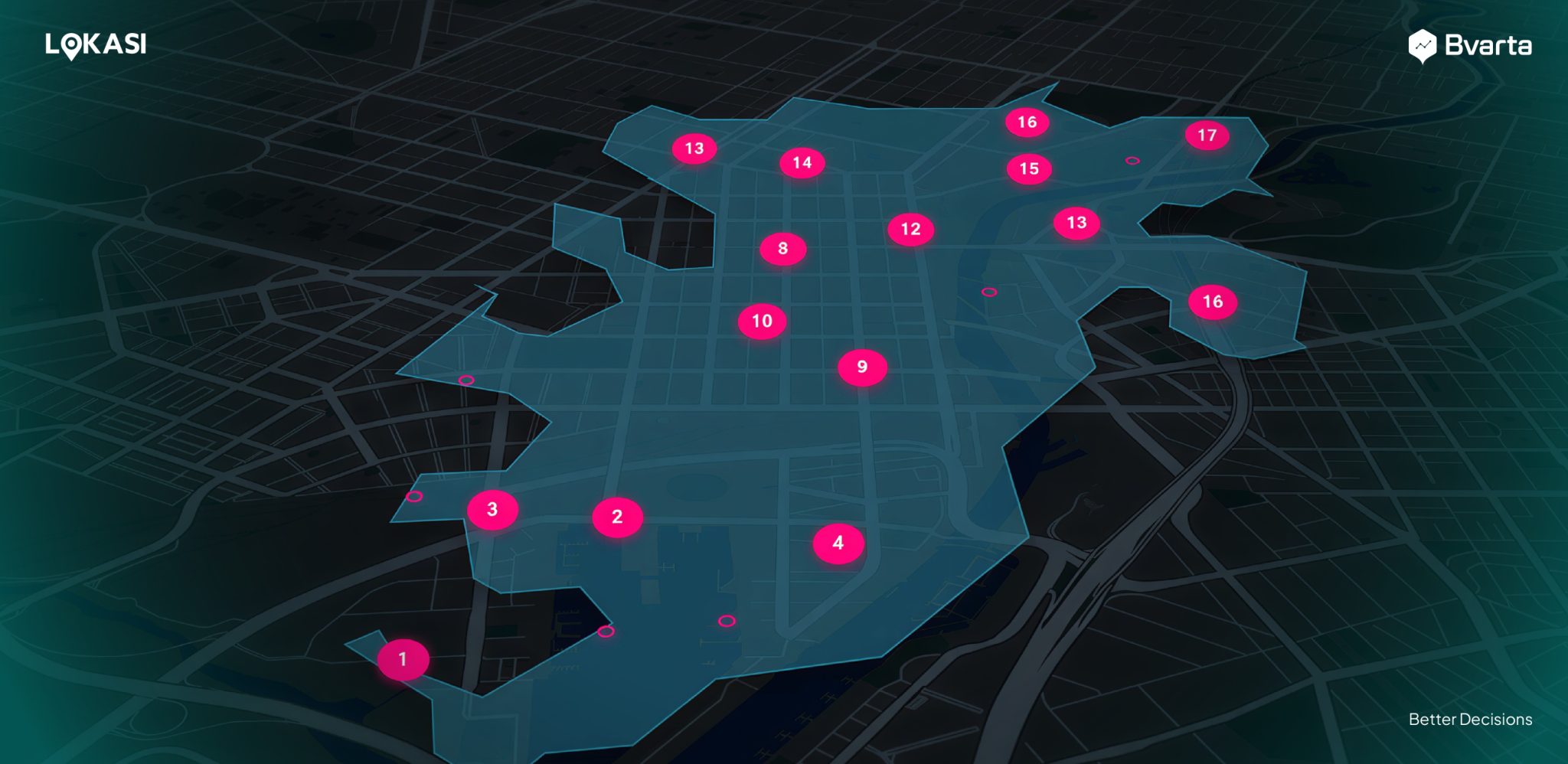
LOKASI Intelligence is a geospatial analytics platform that combines location intelligence with comprehensive location data. With LOKASI, businesses can easily conduct in-depth analyses to determine the best locations for opening new branches, retail stores, restaurants, or other types of businesses.
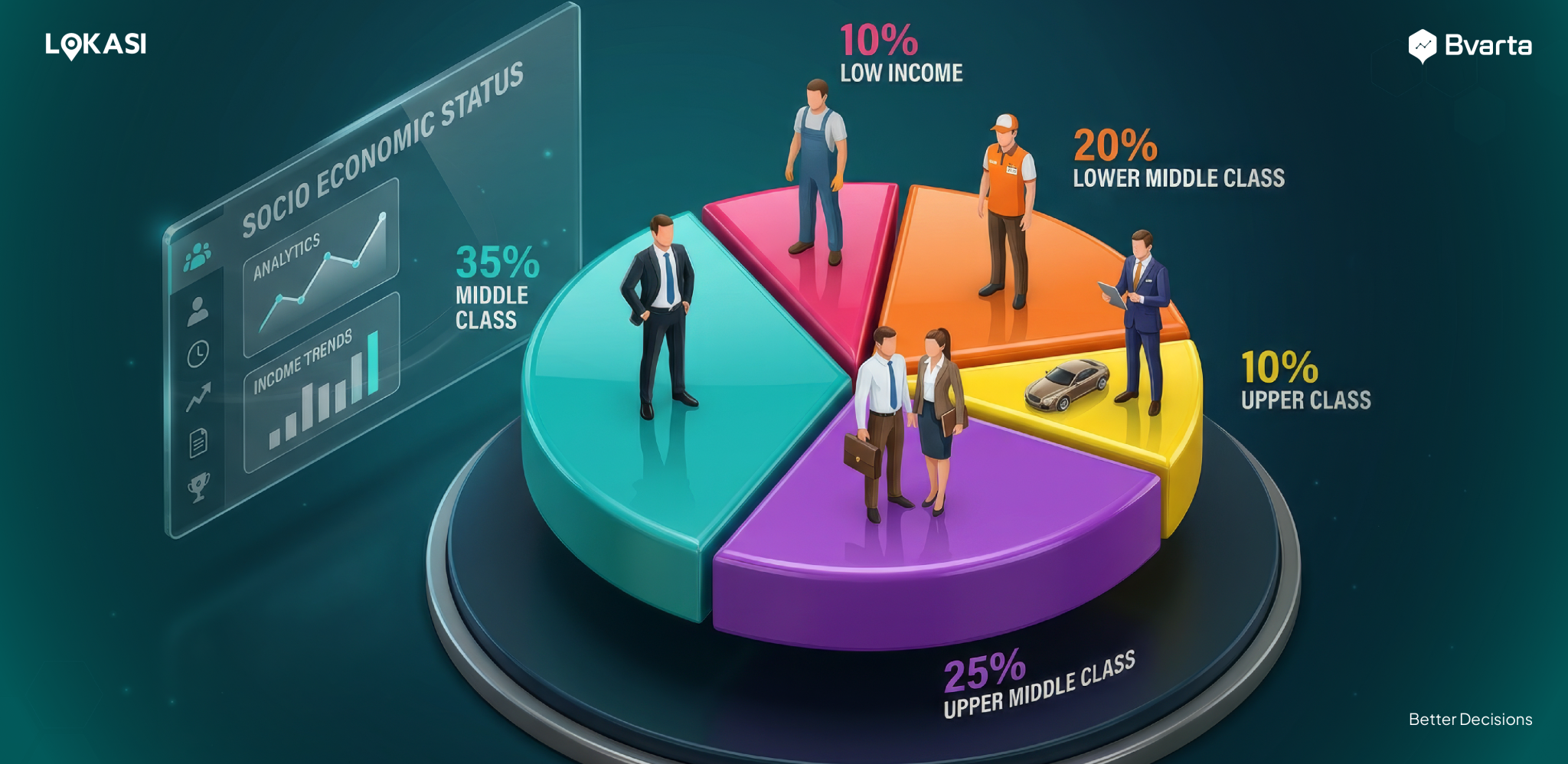
The platform integrates a variety of important data, including demographics (age, gender, population, and education level), foot traffic to measure activity in an area, and socioeconomic status to help businesses understand the purchasing power of potential customers.
In addition, LOKASI also factors in risk data, such as floods, earthquakes, and other potential hazards, allowing businesses to anticipate and minimize future losses.
LOKASI Intelligence doesn’t just help businesses find the most strategic locations; it also provides insights into market characteristics, consumer behavior, and growth potential within specific regions.
FAQ
What is a business location?
A business location is the physical place or geographic area where a business operates.
What are the types of business locations?
Business locations can be categorized as urban (city centers), suburban, or rural areas.
How do you choose a location for your business?
To choose a business location, start by conducting market research to understand the needs and preferences of your target audience. Next, evaluate the level of competition to see if the area is oversaturated or if there are still opportunities for new entrants. Finally, select a location with good accessibility and high foot traffic to maximize sales potential.