
Currently, the need for data centers is increasing along with the rapid digital transformation, the adoption of cloud technology, and artificial intelligence, which require large computing and data storage capacities.
In Indonesia alone, according to data from Databoks, there are approximately 141 active data centers in operation, and this number is expected to continue to grow.
Unfortunately, not all locations are suitable for data centers. Data centers must be located in areas capable of supporting their operational needs, such as large-scale electricity supplies and other infrastructure that not all regions can meet.
In this article, we will discuss strategies that businesses can use to determine the most ideal data center location.
Contents
What Is a Data Center?
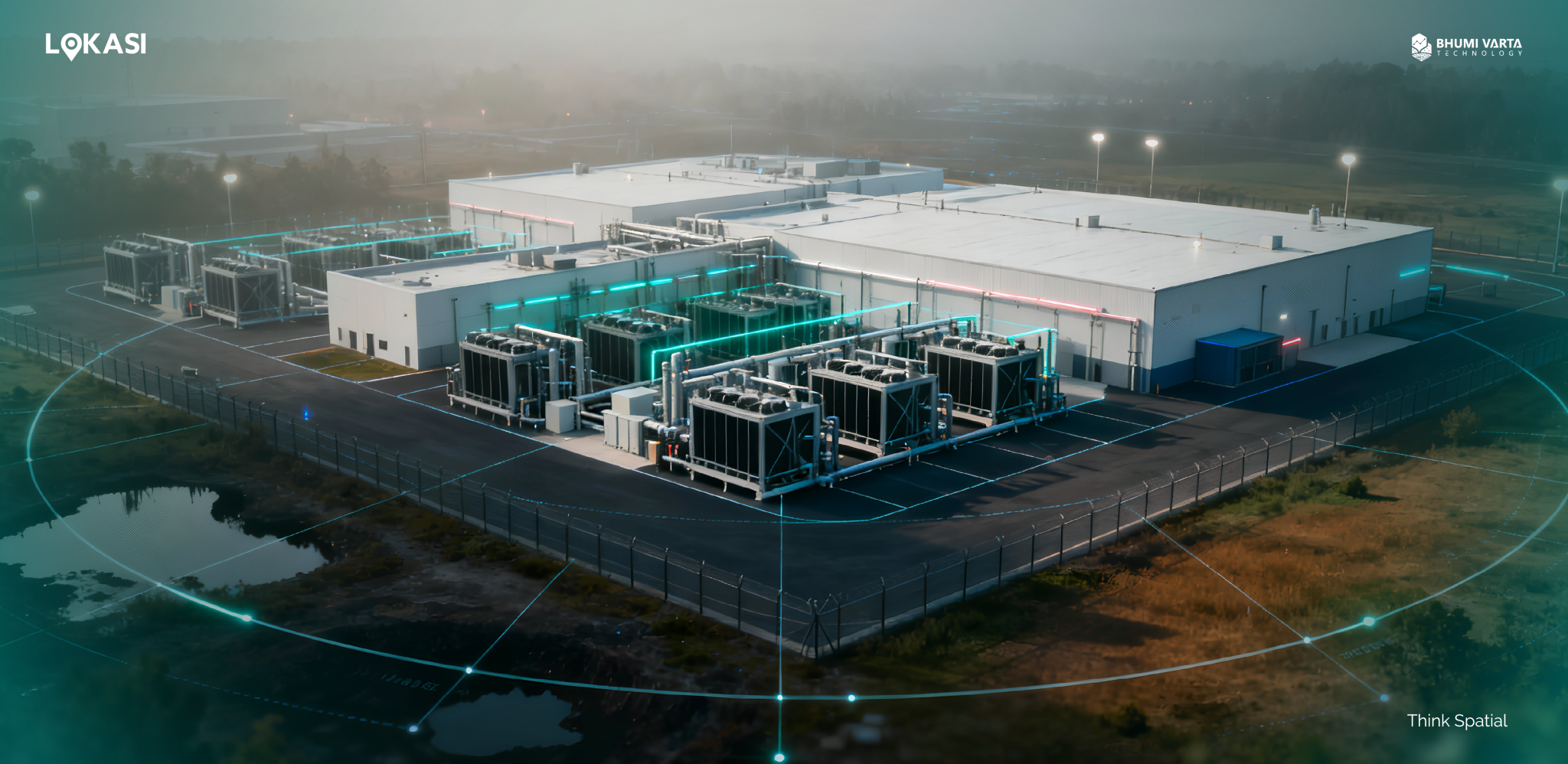
A data center is a physical facility used by businesses and organizations to store and manage their critical data and applications. It houses various technological systems and devices that form the backbone of digital operations.
More specifically, a data center is a dedicated space designed to accommodate technological infrastructure, including servers, networks, and other supporting systems. These components work together to build, run, and deliver digital applications and services.
A data center is not just a central hub for data storage and management. It also provides several strategic benefits for businesses, such as:
- Better scalability
- Enhanced data security
- Significantly higher operational efficiency
- Improved application performance
- Centralized management that simplifies monitoring, maintenance, and control of all technology systems within a single ecosystem
Differences Between Traditional and Modern Data Centers
Data centers are not a recent invention. The concept dates back to the 1940s, specifically at the University of Pennsylvania in 1945.
However, traditional data centers are generally not designed to handle the high power consumption of GPU clusters or the specialized cooling systems required for high-density hardware. These limitations make traditional data centers less flexible in meeting the demands of modern technologies, such as cloud computing and artificial intelligence.
Here are some key differences between traditional and modern data centers:
Deployment speed
Traditional data centers require a relatively long construction period, often taking several months to years. In contrast, modern data centers are designed with a modular and standardized approach, allowing them to be built and operational in just a matter of weeks.
Cost
Traditional data centers require significant upfront capital for building physical infrastructure. In contrast, modern data centers generally have lower initial costs, focusing instead on flexible operational expenses through subscription or pay-as-you-use models.
Scalability
The capacity of traditional data centers is usually predetermined, making it difficult to expand or reduce without substantial additional investment. Modern data centers, however, offer high scalability, allowing businesses to adjust capacity modularly according to their operational needs.
What Are the Criteria for Selecting a Data Center Location?
Research estimates that global data center capacity will double by 2030. This growth is pushing businesses to quickly identify the most optimal locations for building new, modern data centers to meet the increasing demand.
So, what factors should businesses consider when choosing a data center location? Here are the key criteria to guide the site selection process.
Having High Power
The first and most crucial factor in planning a data center location is the availability of a large-scale and stable power supply. This is essential because running servers, GPU clusters, cooling systems, and other supporting infrastructure requires significant energy and operates continuously, 24/7.
For instance, Amazon Web Services (AWS) requires roughly 100 megawatts of power to run its data centers, which is equivalent to the annual electricity consumption of 400,000 electric vehicles. This example highlights the enormous energy demands necessary for optimal data center operation.
Therefore, businesses planning to build a modern data center must ensure that the chosen location can provide a continuous power supply of at least 100 megawatts, including backup power to handle load surges or operational disruptions.
Besides capacity, the energy source is also a key consideration. Whether the power comes from natural gas, coal, or more environmentally friendly alternatives such as wind or solar energy.
Access to Fiber Optic Cables
A data center should ideally be located close to a fiber optic cable network. This proximity is especially important for businesses that rely on high-speed connectivity to deliver real-time digital services to customers.
Fiber optic cables form the backbone of data communications and can handle the massive amounts of traffic generated by cloud services and AI-based applications. This technology allows data to be transmitted at high speeds with low latency, even over long distances.
Therefore, having an integrated fiber optic network near the data center is essential for ensuring optimal service performance, stability, and the ability to meet user expectations.
Close to Consumers
In addition to being near a fiber optic cable network, an ideal data center location should also be close to consumers or end users. Geographic proximity directly affects data processing and delivery speeds, as shorter distances between the data center and users result in lower latency.
Access speed plays a critical role in the user experience. Digital applications and services that load quickly feel more responsive, stable, and comfortable to use.
Even small delays can have a significant impact. According to Google research, a one-second delay in page load time can reduce user satisfaction by up to 20 percent.
Therefore, placing data centers closer to areas with high consumer activity is a key strategy for businesses aiming to maintain service quality and user satisfaction.
Environmental Conditions
Developing a data center requires careful consideration of the surrounding environmental conditions, particularly the risk of natural disasters such as floods, landslides, earthquakes, or fires.
This is critical because such disasters can disrupt data center operations, causing sudden power outages or physical damage to infrastructure. These disruptions can affect the performance of dozens or even hundreds of digital applications and services that depend on the data center.
Therefore, when choosing a location, businesses must ensure that the data center is situated in an area that is relatively safe from natural disaster risks.
Regional Regulations
Different regions have varying environmental rules and regulations, making this an important factor in data center planning. One key consideration is water usage, as modern data centers require substantial amounts of water for cooling and other operations.
For example, Google reports that its data centers will need approximately 5.2 billion gallons of water by 2023.
Beyond complying with environmental regulations, businesses must ensure that all permits for data center construction and operation are legally obtained. This includes approvals from local government authorities as well as support from the local community, since community backing can influence both the construction process and long-term operations.
Find the Best Data Center Location with LOKASI Intelligence
LOKASI Intelligence is a geospatial analytics platform that combines location data with advanced location intelligence. With LOKASI, businesses can easily map, analyze, and understand the characteristics of a location in detail. It also helps identify the most ideal and optimal sites for data center development.
LOKASI leverages various types of geospatial data, including demographics, traffic flow, natural disaster risk, socio-economic conditions, and other environmental factors.
By integrating this data with in-depth analysis, businesses can ensure that their data centers are built in strategic, secure locations that support long-term operational performance.
To learn more about how LOKASI Intelligence can help your business, contact us at: Email: [email protected] or WhatsApp: 0877 7907 7750
FAQ
Where are data centers typically located?
Data centers are usually situated in areas that can provide a large-scale power supply, are close to fiber optic cable networks for high-speed connectivity, and are relatively safe from natural disaster risks.
What are the requirements for a data center location?
Key requirements for a data center location include a reliable power supply, access to fiber optic cables, proximity to customers, a safe environment, and support from local regulations.
What is a data center?
A data center is a physical facility where businesses and organizations store and manage their critical data and applications. It houses various systems and technological devices that form the backbone of digital operations.