
Every business that has a physical location, like restaurants, retail shops, supermarkets, or even small grocery stores, needs lead generation. It’s what helps bring in new customers, boost sales, and keep revenue growing.
With good lead generation, businesses can also run smarter marketing campaigns and fine-tune their strategies to really hit the right audience.
One way to do that is by using POI (Point of Interest) data. In simple terms, POI data is information about popular places people go to, like malls, schools, hospitals, cafés, or event venues. With this data, businesses can get insights into customer behavior, check out competitors, and even find new opportunities to expand.
In this article, we’ll break down how POI data can be a game-changer for lead generation, helping you reach the right people at the right time and speed up your growth.
Contents
Why POI Data Matters for Lead Generation
Point of Interest (POI) data refers to information about specific locations or areas that attract frequent visits from people. These visits can happen on a daily basis, seasonally during holidays, or occasionally for special events.
Examples of POIs include stadiums, restaurants, shopping centers, grocery stores, office buildings, and even arts or entertainment venues.
For businesses, POI data is highly valuable because it offers a deeper understanding of how people move, interact, and engage within a particular area.
With these insights, companies can strengthen their lead generation efforts in several ways, such as creating more accurate location mapping, reaching the right consumers through targeted outreach, understanding the demographics and behaviors of nearby audiences, and performing detailed competitor analysis.
How Businesses Use POI Data
Businesses can utilize POI (Point of Interest) data as a crucial foundation for conducting assessments, developing strategies, and making more informed decisions.
Below are some examples of how POI data can be applied to lead generation across different industries.
Targeting Brands with the Same Market Segment
Restaurants and F&B businesses, in particular, can use POI data to identify the best locations for opening new branches. This involves analyzing the consumer potential around other brands that target similar market segments.
For example, a healthy juice brand looking to expand might use POI data to locate areas where other food and beverage retailers—such as coffee shops or snack bars—are already present. The idea is that customers who stop by for a coffee may also be open to trying other beverage options, including fresh juices.
By positioning themselves near established brands, juice businesses can take advantage of existing foot traffic instead of starting from scratch. This approach not only increases the likelihood of generating new leads but also makes branch expansion strategies more targeted and efficient.
Market Mapping
For businesses involved in distribution, POI (Point of Interest) data can be a powerful tool for market mapping. By visualizing business distribution in a specific area, companies gain a clearer understanding of market conditions—whether the area is already saturated with competitors or still holds untapped opportunities.
Typically, distribution companies rely on field sales teams to acquire new merchants and monitor the performance of existing ones. Without clear data, this process can be time-consuming, costly, and labor-intensive, as it often requires direct field research.
With POI data, businesses can more easily identify:
- Which merchants have the potential to become new partners
- Which merchants are already part of the distribution network
- Which areas remain open and suitable for expansion
This mapping allows distributors to develop more efficient sales strategies, allocate resources effectively, and prioritize areas with the highest growth potential.
Targeted Outreach
When POI (Point of Interest) data is combined with other location-based data, its value for businesses grows significantly. This combination supports more precise targeted outreach by providing deeper insights into who consumers are in an area, how they behave, and their daily movement patterns.
With this understanding, businesses can:
- Personalize ads based on consumer demographics and behavior
- Optimize ad placement in the most strategic locations
- Conduct competitive analysis by assessing competitors’ presence in the area
- Identify locations with a high concentration of potential customers for acquisition
- Leverage high-traffic areas to increase opportunities for capturing new leads
By combining these data sources, businesses can maximize the effectiveness of their marketing campaigns. As a result, ads and messages reach the right audience, in the right place, and at the right time.
Get Complete Point of Interest Data with LOKASI Intelligence
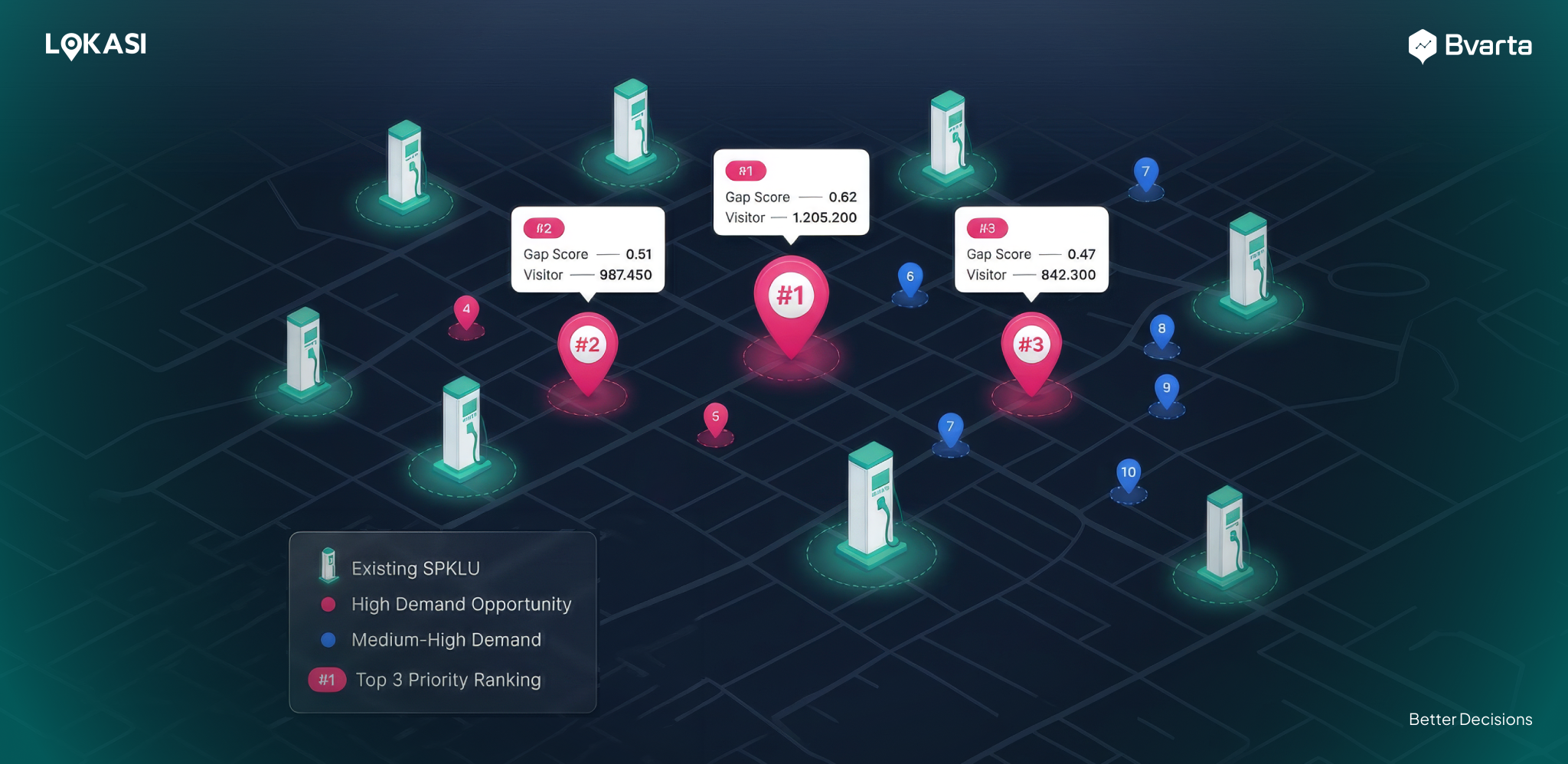
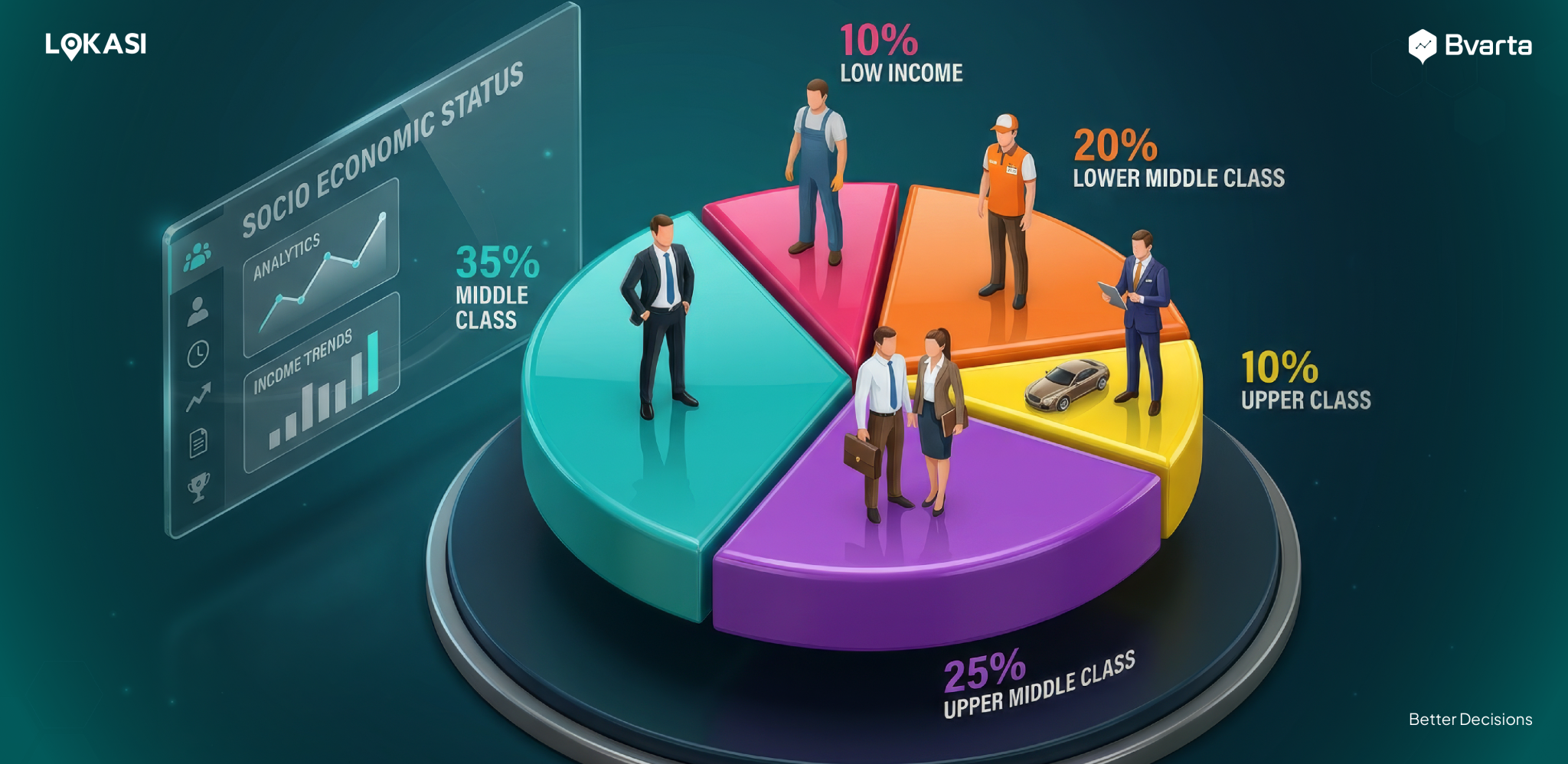
LOKASI Intelligence is a geospatial analytics platform that integrates location intelligence with comprehensive location data. This includes POI (Point of Interest) data, people traffic, demographics, socioeconomic status, and more.
With POI data in LOKASI Intelligence, businesses can make smarter decisions for expansion, location selection, and lead generation more effectively.
Learn more about how LOKASI Intelligence can support your business by contacting us at: 📧 Email: [email protected] or 📱 WhatsApp: 087779077750
FAQ
What is a Point of Interest (POI)?
A POI is information about a location or area that is frequently visited by many people.
What are examples of POI data?
Examples include stadiums, restaurants, schools, shopping centers, grocery stores, office buildings, and arts or entertainment venues.
What does POI mean in business?
In a business context, a POI refers to a specific location that has the potential to attract many visitors, whether regularly, seasonally, or during major events.