
Ever noticed a retail store in a super busy area that still didn’t last long and ended up closing? It happens more often than you’d think.
One big reason is that the area is already packed with similar businesses. Competition gets tough, and it becomes harder to win over new customers.
That’s why doing a market saturation analysis is so important before opening a new branch or planning an expansion. This kind of analysis helps you see if there’s still room to grow or if the market is already full.
In this article, we’ll break down what market saturation analysis is, why it’s useful, and how you can use it to grow your business smarter.
Contents
What is Market Saturation Analysis?
Market saturation analysis examines a condition where the number of goods or services available in the market is so high that it meets or even exceeds consumer demand. In simple terms, the market has reached its maximum capacity, leaving very little room for growth.
When a market is saturated, businesses, especially in retail, struggle to attract new customers because most consumer needs are already met by existing players. As a result, efforts to boost sales or expand the market become increasingly challenging.
By conducting a market saturation analysis, businesses can evaluate the level of competition, identify dominant competitors, and estimate the portion of the market that still has growth potential.
This analysis helps retailers reduce mistakes when choosing locations or target markets while also uncovering opportunities for more effective strategies.
Key Indicators of Market Saturation
Markets that have reached saturation typically show certain observable characteristics. Some common signs include:
Consumer Acquisition Rate
One of the first indicators that a market has entered the saturation stage is very low or stagnant growth in acquiring new customers. This suggests that almost all potential customers have already been reached, making it increasingly difficult to attract new ones.
Number of Similar Businesses
Another indicator is a high number of similar businesses operating in the area, which reduces the market share available to each company. As a result, potential profits decline because businesses must share a relatively fixed customer base.
In such situations, competition becomes intense and can lead to price wars, where companies lower prices to attract customers. Unfortunately, this strategy often erodes profitability and makes long-term growth more challenging.
Changing Trends
The final indicator is a shift in consumer behavior. For example, consumers may start preferring more innovative, healthier, or environmentally friendly products.
This change leads to a decline in demand for older products that no longer align with people’s needs and lifestyles. When consumption patterns shift significantly and demand for a particular product continues to drop, it signals that the market is saturated, making growth increasingly difficult without new innovations.
Benefits of Market Saturation Analysis
Market saturation analysis is essential for helping businesses recognize the signs of market saturation discussed earlier. By understanding these indicators, businesses can develop better retail strategies, stay competitive, and reduce the risk of losses from poor decisions. Additional benefits include:
Avoiding Cannibalization Between Branches
When retailers plan to open new stores, one of the biggest challenges is the risk of cannibalization with nearby branches. Instead of attracting new customers, new stores can reduce sales at existing locations because both operate within the same market area.
This can negatively affect the overall performance of the retail network. Market saturation analysis helps businesses evaluate the market potential in a specific area and ensures that the number of branches matches demand.
One approach is to calculate the total addressable market (TAM), which represents the total number of potential consumers in a given area. By understanding TAM, businesses can identify the best locations and determine the ideal number of branches, allowing for profitable expansion without taking customers away from existing stores.
Finding Opportunities
Another benefit of market saturation analysis is its ability to highlight underdeveloped markets or areas with low competition. In these regions, many consumer needs may still be unmet due to limited product or service options.
By using this insight, businesses can enter early, provide relevant solutions, and establish a strong position before competitors arrive. This strategy not only creates new growth opportunities but also offers long-term competitive advantages.
Reducing the Chance of Stores Shutting Down
Have you ever heard about Starbucks having to close many of its branches after a major expansion? This often happens because rapid growth can lead businesses to open stores in highly competitive locations.
As a result, each branch may attract only a small number of customers, profits remain low, and survival becomes difficult. Cases like this highlight the importance of conducting a market saturation analysis before expanding.
With this analysis, businesses can estimate the level of demand in an area, gain a clearer understanding of the competitive landscape, and reduce the risk of store closures due to poor location choices.
Identify Your Target Market Potential with LOKASI
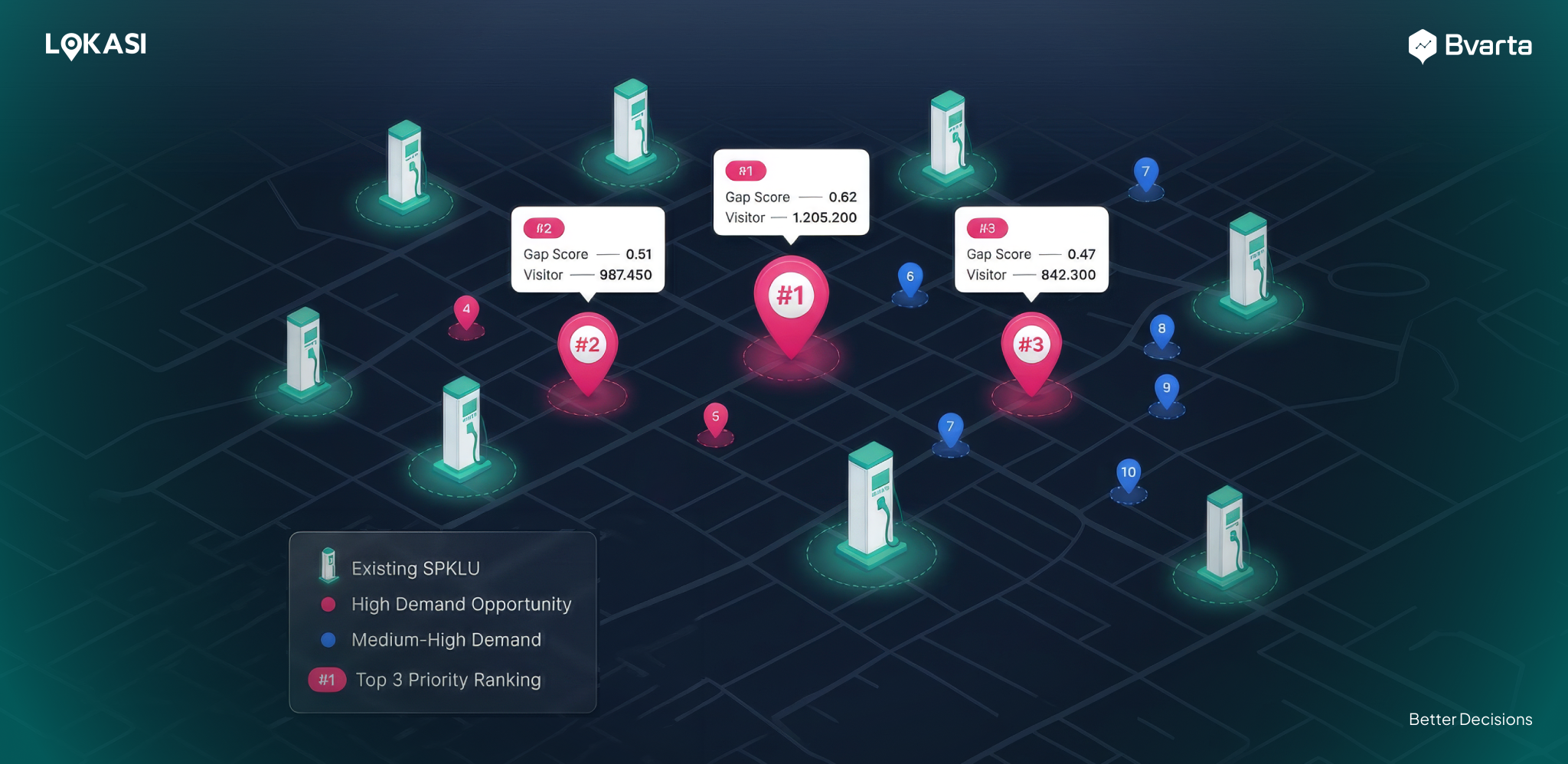
LOKASI is a geospatial analytics platform that provides comprehensive location data. With LOKASI, businesses can see the distribution of competitors, including their brand names, and accurately determine the distance and position of each location.
The platform also allows companies to map their own networks, analyze congested areas, and identify regions with expansion potential. With these insights, businesses can make more informed location decisions, optimize market reach, and minimize competitive risks.
Learn more about how LOKASI Intelligence can help your business by contacting us at:
Email: [email protected] WhatsApp: 087779077750
FAQ
What is market saturation?
Market saturation occurs when the number of goods or services in a market is so high that it meets or exceeds consumer demand.
What are saturated and unsaturated markets?
A saturated market has reached its maximum capacity, leaving very little room for growth. In contrast, an unsaturated market still has significant growth potential.
What are examples of saturated markets?
A saturated market typically shows very low growth in new customers, a growing number of similar businesses operating in the area, and noticeable changes in consumer behavior.