
Contents
What Is a Trade Area?
A trade area is the geographic zone from which a store draws most of its customers. Think of it as the catchment zone of your business, the area within which the majority of your potential buyers live, work, or regularly pass through.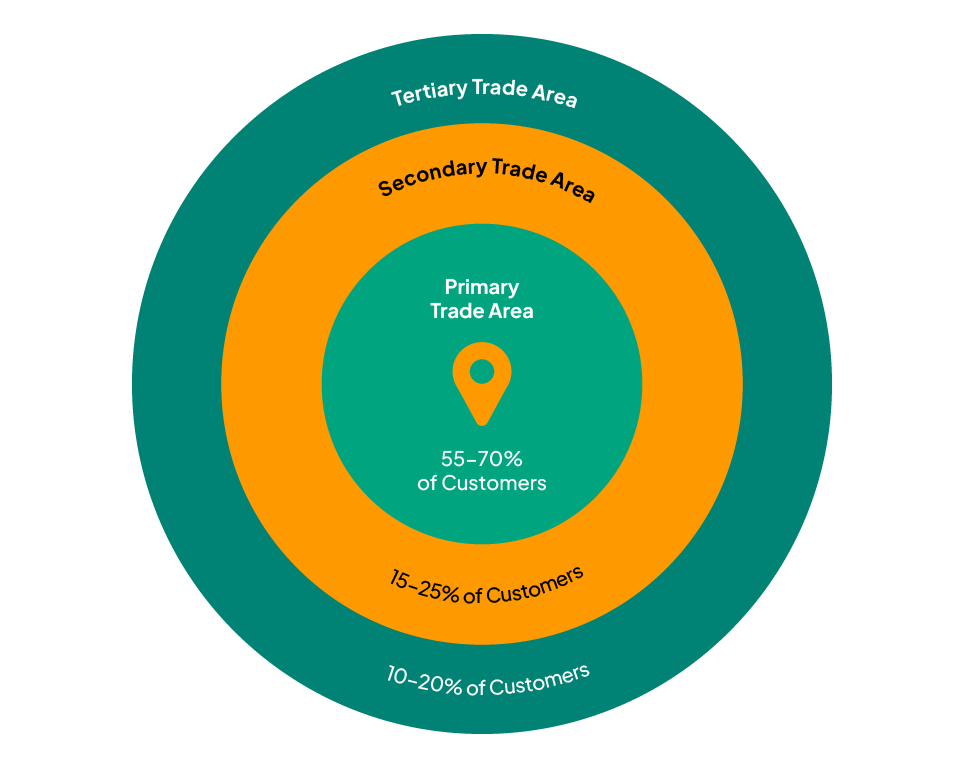 Figure 1. Trade Area Zone Diagram. Source: Segmentspot.com
Trade areas are typically broken into three layers:
Figure 1. Trade Area Zone Diagram. Source: Segmentspot.com
Trade areas are typically broken into three layers:
- Primary zone, where 60 to 70 percent of your regular customers come from. This is closest to your store.
- Secondary zone, captures another 15 to 25 percent of customers who travel a bit further.
- Tertiary zone, occasional visitors from further out, often drawn in by promotions or limited alternatives nearby.
Why It Matters Before You Expand
Opening a new store without a trade area analysis is a bit like casting a net without knowing if there are fish. You might get lucky. But you are mostly guessing. Here is what a proper trade area analysis actually tells you:- Population density and demographics : You need to know whether your target customer profile actually lives or works in the area, not just whether the area is generally populated. A densely populated zone filled with the wrong demographic is just as risky as a low-traffic one.
- Purchasing power : Foot traffic only matters if the people walking by have the means and willingness to spend on what you sell. Understanding income levels and spending behavior in the catchment tells you whether real demand exists, not just footfall.
- Competitor presence : Knowing who else is already operating in the area — and how established they are, tells you whether you are entering a healthy market with room to compete, or a saturated one where fighting for share will cost more than the location is worth.
- Accessibility : A store that is technically nearby but hard to reach due to traffic, limited parking, or poor transit connectivity will always underperform its potential. How people actually move through the area matters as much as where they live.
- Cannibalization risk : For brands with existing locations, a new store that pulls from the same customer base as an existing one does not grow the business — it splits it. Understanding the overlap between trade areas before opening is how you avoid investing in growth that is actually just redistribution.
How Location Intelligence Changes the Picture
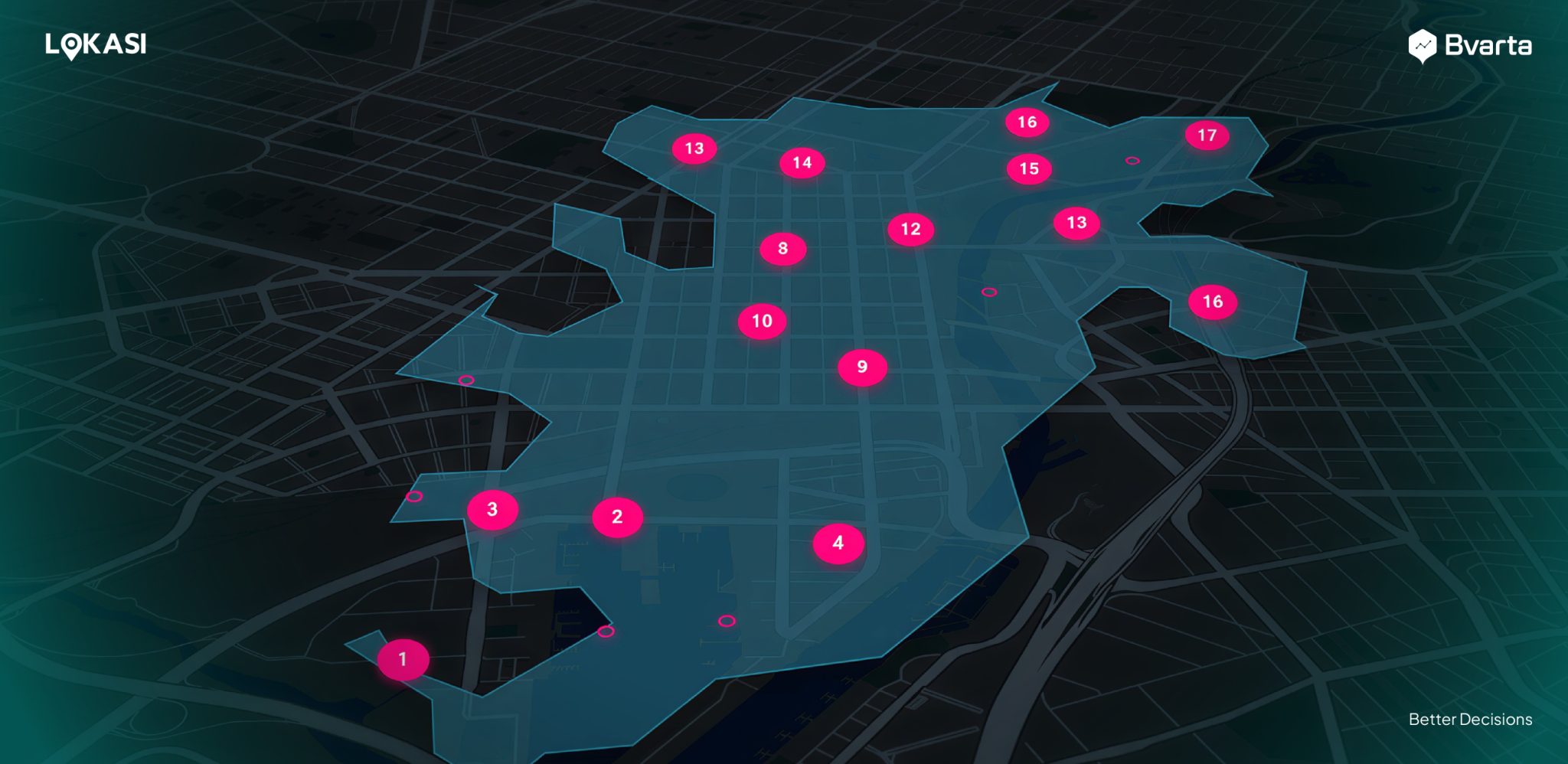
Traditional trade area analysis meant paper maps, census books, and a lot of manual estimation. Today, location intelligence platforms can do the same work in a fraction of the time with far greater accuracy.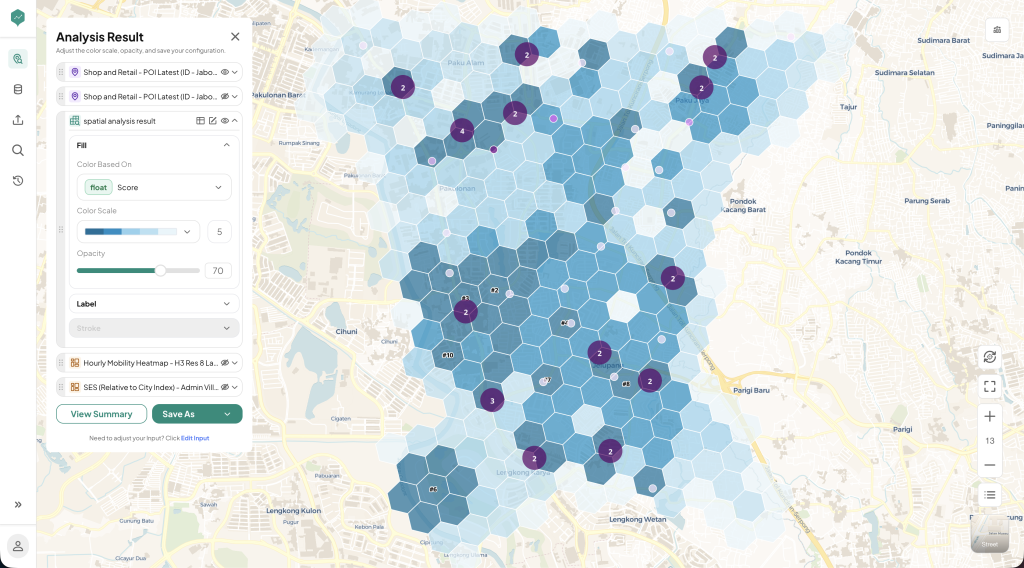 Figure 2. Sample Trade Area Map (LOKASI Intelligence)
Traditional trade area analysis meant paper maps, census books, and a lot of manual estimation. Today, location intelligence platforms can do the same work in a fraction of the time with far greater accuracy.
Using tools like LOKASI Intelligence, retailers can run this kind of analysis by combining multiple data layers, each carrying its own weight in the model based on what matters most for the business. For a minimarket expansion in North Serpong, for example, the analysis might pull in SES data to understand the socioeconomic profile of the surrounding area, mobility data to see where people actually move on a daily basis, and POI data from existing retail players in the area. Competitor locations can be fed in as a negative parameter, so zones that are already heavily served by established players are factored down in priority.
The output is not a hand-drawn circle on a map. It is a hexagonal grid laid over the actual geography, where each cell is scored and color-coded based on the combined weight of all input data. Darker hexagons indicate the strongest zones as your primary trade area. As the color lightens, you move into secondary and tertiary territory. What you end up with is a clear, data-driven picture of where demand is concentrated, where competition dilutes your opportunity, and where the real catchment for your store is likely to form
Figure 2. Sample Trade Area Map (LOKASI Intelligence)
Traditional trade area analysis meant paper maps, census books, and a lot of manual estimation. Today, location intelligence platforms can do the same work in a fraction of the time with far greater accuracy.
Using tools like LOKASI Intelligence, retailers can run this kind of analysis by combining multiple data layers, each carrying its own weight in the model based on what matters most for the business. For a minimarket expansion in North Serpong, for example, the analysis might pull in SES data to understand the socioeconomic profile of the surrounding area, mobility data to see where people actually move on a daily basis, and POI data from existing retail players in the area. Competitor locations can be fed in as a negative parameter, so zones that are already heavily served by established players are factored down in priority.
The output is not a hand-drawn circle on a map. It is a hexagonal grid laid over the actual geography, where each cell is scored and color-coded based on the combined weight of all input data. Darker hexagons indicate the strongest zones as your primary trade area. As the color lightens, you move into secondary and tertiary territory. What you end up with is a clear, data-driven picture of where demand is concentrated, where competition dilutes your opportunity, and where the real catchment for your store is likely to form
A Mistake That Keeps Happening
One of the most common errors in retail expansion is choosing locations based on property cost or raw foot traffic volume. A busy street does not automatically mean the right crowd. A cheap rental might be cheap for a reason. Trade area analysis helps you move past surface signals. A location with moderate foot traffic but a high concentration of your ideal customer profile can easily outperform a high-traffic location full of the wrong demographic. The brands that expand well are not always the ones with the biggest budgets. They are the ones who understand the market before they enter it.Before You Sign That Lease
Whether you are opening one new store or ten, trade area analysis should be a non-negotiable step in your process. Not because it eliminates risk, nothing does but because it makes sure the decision is based on evidence, not optimism. Want to see how this works for your specific locations? Bvarta’s team can walk you through it using real data from your target markets.