
Healthcare decisions have always depended on data, patient records, lab results, and treatment histories. But one critical factor has long been overlooked: place. Where patients live, work, and seek care shapes their health outcomes as much as any clinical variable.
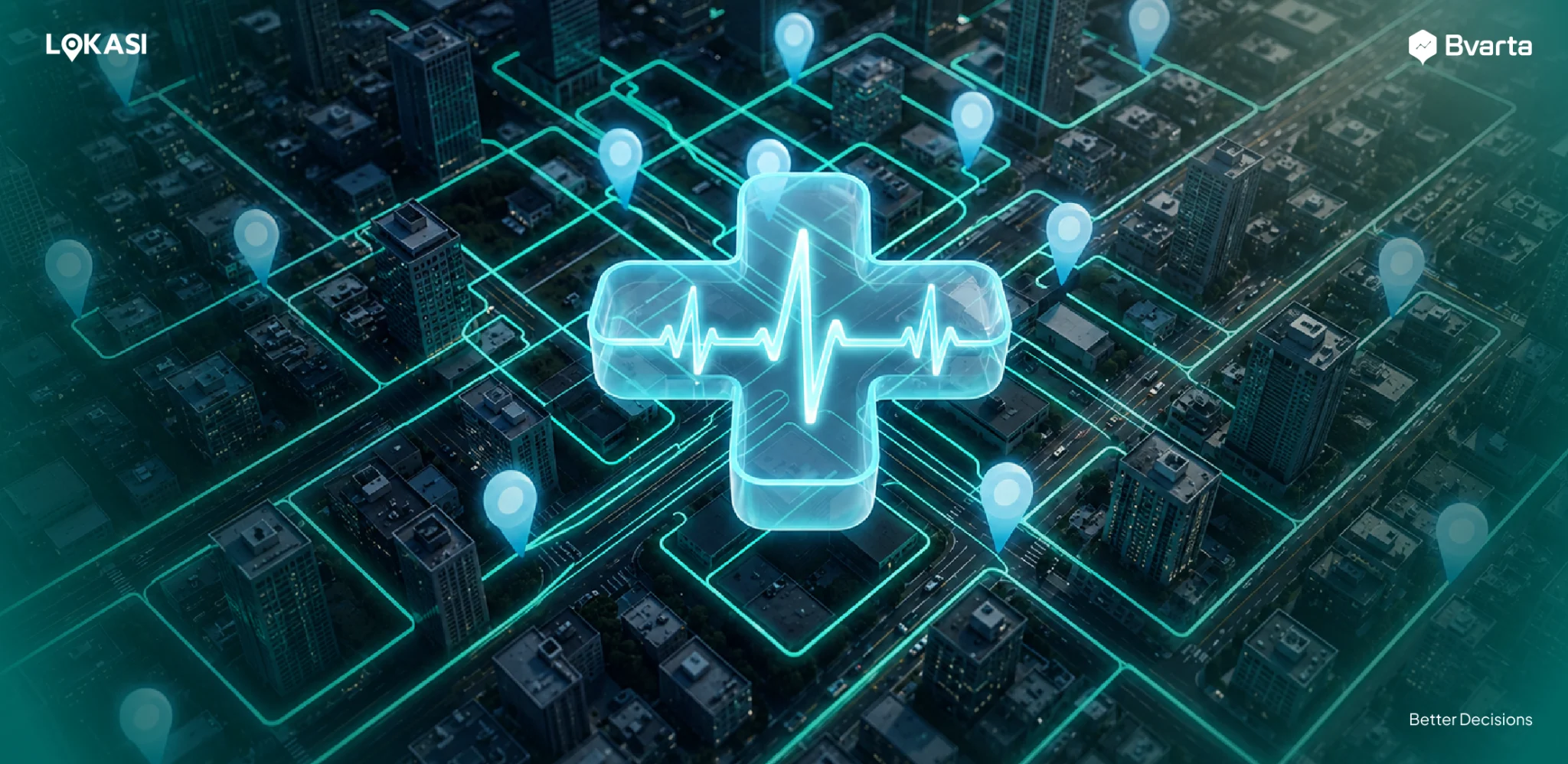
Location intelligence gives healthcare organizations the tools to see and act on that reality, optimizing facility placement, tracking disease spread, reducing care gaps, and allocating resources where they are needed most.
This article explores how location intelligence is being applied across the healthcare sector and why it is becoming an essential part of modern health strategy.
Contents
What Is Location Intelligence in Healthcare?
Location Intelligence (LI) is the use of geospatial data to support decision-making. In healthcare, that means analyzing where patients are, where resources are, and where gaps exist, then acting on them.
Key Components
- GIS (Geographic Information Systems): the foundational technology. GIS maps and analyzes spatial relationships, from patient catchment areas to disease clusters.
- Spatial Data: any data tied to a location: patient addresses, facility coordinates, census demographics, transportation routes, environmental risk factors.
- Mapping Tools: platforms that turn raw spatial data into visual, actionable maps.
Why Location Intelligence Matters for Healthcare Organizations
Healthcare organizations deal with a simple but persistent challenge: resources are finite, and demand is uneven. Knowing where patients are, where diseases spread, and where care is hard to access helps organizations make smarter decisions, faster.
Location intelligence turns geographic data into operational insight. It helps hospital networks decide where to open or close facilities, helps public health teams detect outbreaks early, and helps planners identify communities that are underserved. The result is better resource allocation, reduced costs, and improved patient outcomes.
Key Use Cases of Location Intelligence in Healthcare
Location intelligence is applied across multiple areas of healthcare operations. The most common use cases include:
- Facility planning: determining where to build, expand, or consolidate hospitals and clinics based on population distribution and access gaps.
- Epidemic and disease tracking: monitoring how infections spread across geographic areas to enable faster containment and response.
- Patient access analysis: identifying communities with limited access to care due to distance, transportation barriers, or provider shortages.
- Resource allocation: directing staff, equipment, and services to areas of highest need.
- Emergency response planning: optimizing ambulance routes, hospital capacity, and disaster readiness based on geographic and demographic data.
Real-World Examples and Case Studies
Here is what location intelligence looks like when it is actually working.
Patient Access and Care Gap Analysis
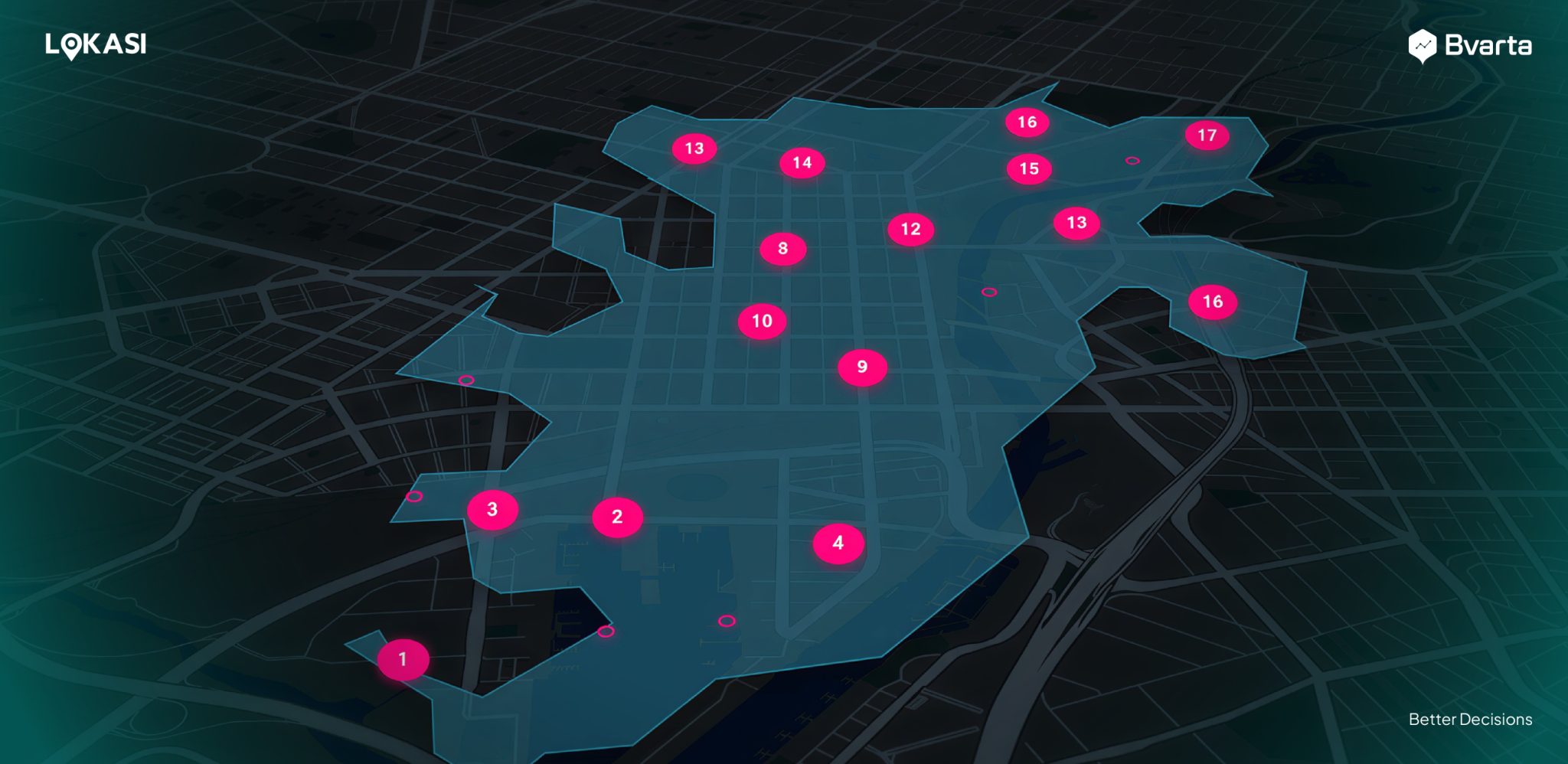
Healthcare providers use location intelligence to identify where patients struggle to reach care. By mapping population density against clinic locations, travel times, and transportation routes, organizations can pinpoint underserved areas and make informed decisions about where to expand services.
Facility Network Optimization
Hospital networks use geographic analysis to evaluate whether their facilities are positioned to meet actual patient demand. This helps them avoid duplication in some areas while addressing shortages in others — reducing costs and improving coverage.
Disease Surveillance and Outbreak Response
Public health agencies layer geographic data with case reports and demographic information to track how diseases spread. This allows faster identification of hotspots and more targeted containment efforts.
Improve Your Healthcare Business with Lokasi Intelligence
LOKASI Intelligence is a geospatial analytics platform that integrates location intelligence and location data.
Lokasi Intelligence helps healthcare organizations make smarter decisions using location data. From facility planning to patient access mapping, we turn geography into a competitive advantage.
Running a healthcare business means making decisions that affect lives.
When you open a clinic, how you deploy staff, and which communities you serve, every choice has a location dimension. Most organizations make these decisions based on incomplete information. Lokasi Intelligence changes that.
We provide the spatial data, mapping tools, and geospatial analytics your organization needs to see the full picture. Know exactly where your patients are coming from, where your coverage ends, and where your next investment will have the greatest impact.
Consult us for a free consultation via email: [email protected] or WhatsApp: 0877 7907 7750
FAQ
What is location intelligence in healthcare?
Location intelligence in healthcare is the use of geospatial data and mapping technology to analyze where patients live, where diseases spread, and where care gaps exist, then using that information to make better operational and strategic decisions.
What problems does location intelligence solve in healthcare?
It helps organizations identify underserved communities, optimize facility placement, track disease outbreaks, improve emergency response routing, and allocate staff and equipment more efficiently.
How does Lokasi Intelligence support healthcare organizations specifically?
Lokasi Intelligence provides a geospatial analytics platform built around healthcare decision-making. From patient access mapping to facility network optimization and disease surveillance, we help health organizations turn location data into clear, actionable insight.