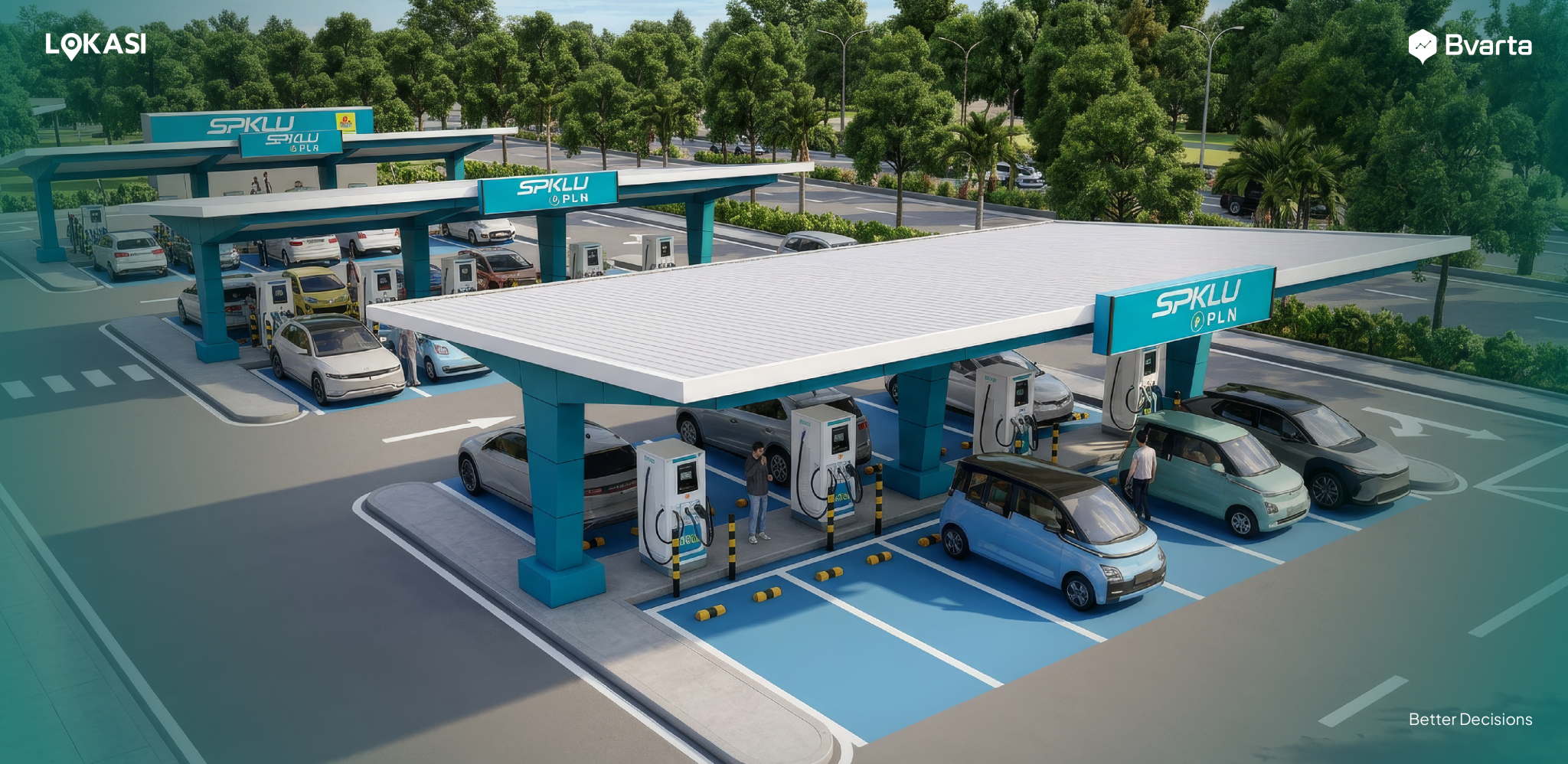

Electric vehicles are popping up more and more on our roads these days. It’s no surprise, as Techdaily.id reports that EV growth in Indonesia has jumped from just 2 percent to 12 percent over the past two years.
With more EVs on the road, the demand for supporting infrastructure, like charging stations, is growing too. But you cannot just put a charging station anywhere. The wrong location can lead to low usage and wasted resources.
This is where Location Intelligence comes in. It helps businesses figure out the best spots for EV charging stations, places that are strategic, efficient, and actually useful for drivers.
In this article, we will take a closer look at how Location Intelligence helps choose the right locations for EV charging stations so they reach the people who need them most.
Contents
Electric Vehicle Trends in Indonesia
According to Kompas.com, the Indonesian Ministry of Industry recently released the latest data on the country’s electric vehicle population. As of June 24, 2025, a total of 274,802 electric vehicles had been officially registered and obtained Type Test Registration Certification (SRUT).
This represents a significant increase compared to 2024, when around 207,000 electric vehicles were registered. In less than a year, this amounts to a 32.75 percent growth.
This rise is a strong indicator that electric vehicle adoption in Indonesia is on a very positive trajectory. The growth not only reflects the increasing public interest in environmentally friendly vehicles but also highlights the support of the ecosystem and government policies that are driving the development of the national electric vehicle industry.
Electric Vehicle Charging Station Infrastructure Challenges
As electric vehicle adoption continues to rise in Indonesia, the need for adequate supporting infrastructure is becoming increasingly urgent. One of the main challenges is the availability of charging stations.
Having sufficient and strategically placed charging stations not only makes it easier for electric vehicle users but also ensures efficient and optimal operations for service providers.
However, the electric vehicle industry faces several challenges, particularly when it comes to charging station infrastructure. Key challenges include:
Uneven Distribution
The first challenge is the uneven distribution of charging station infrastructure, especially in rural or remote areas.
This imbalance raises concerns for electric vehicle users, who may worry about running out of power during long trips and being unable to find a nearby charging station. This situation not only affects user convenience but also hinders the accelerated adoption of electric vehicles nationwide.
Low Usage
The second challenge is closely related to the first, uneven distribution of charging stations. As a result, some stations are constantly busy and overused, while others see very little traffic. This imbalance often stems from inadequate data or insufficient analysis during the planning of station locations.
Consequently, stations with low usage become a financial burden, as the costs of construction and operation are not matched by the benefits or performance they deliver. This situation underscores the importance of data-driven planning to ensure that every charging station operates efficiently and reaches its full potential.
How Does Location Intelligence Help Determine Charging Station Locations?
Location Intelligence is a technology that allows users to analyze and visualize geospatial data. Using this technology, companies and individuals can identify patterns, trends, and insights within location data, providing a solid foundation for more informed and strategic decision-making.
This location-based data includes:
- Points of Interest (POI): Locations that attract attention or are frequently visited by the public, such as malls, supermarkets, schools, residential areas, offices, and other public spaces.
- Latitude and Longitude: Geographic coordinates that specify the exact position of a location on the Earth’s surface, enabling precise mapping and spatial analysis.
- Maps: Visual representations of geographic areas that help users understand the distribution of locations, movement patterns, and relationships between different areas.
- Telco Data: Information collected from smartphones or telecommunications networks that provides insights into people’s movements (people traffic) and visitor density at a specific location.
- Geocoding Data: The process of converting addresses or location information into geographic coordinates, which can then be used for spatial analysis and mapping.
- Physical Location: The actual position or presence of an object, facility, or place in the real world, serving as a reference for location-based decision-making.
The following section explains how Location Intelligence can be used to determine the optimal locations for electric vehicle charging stations.
Electric Vehicle Charging Station Network Visualization
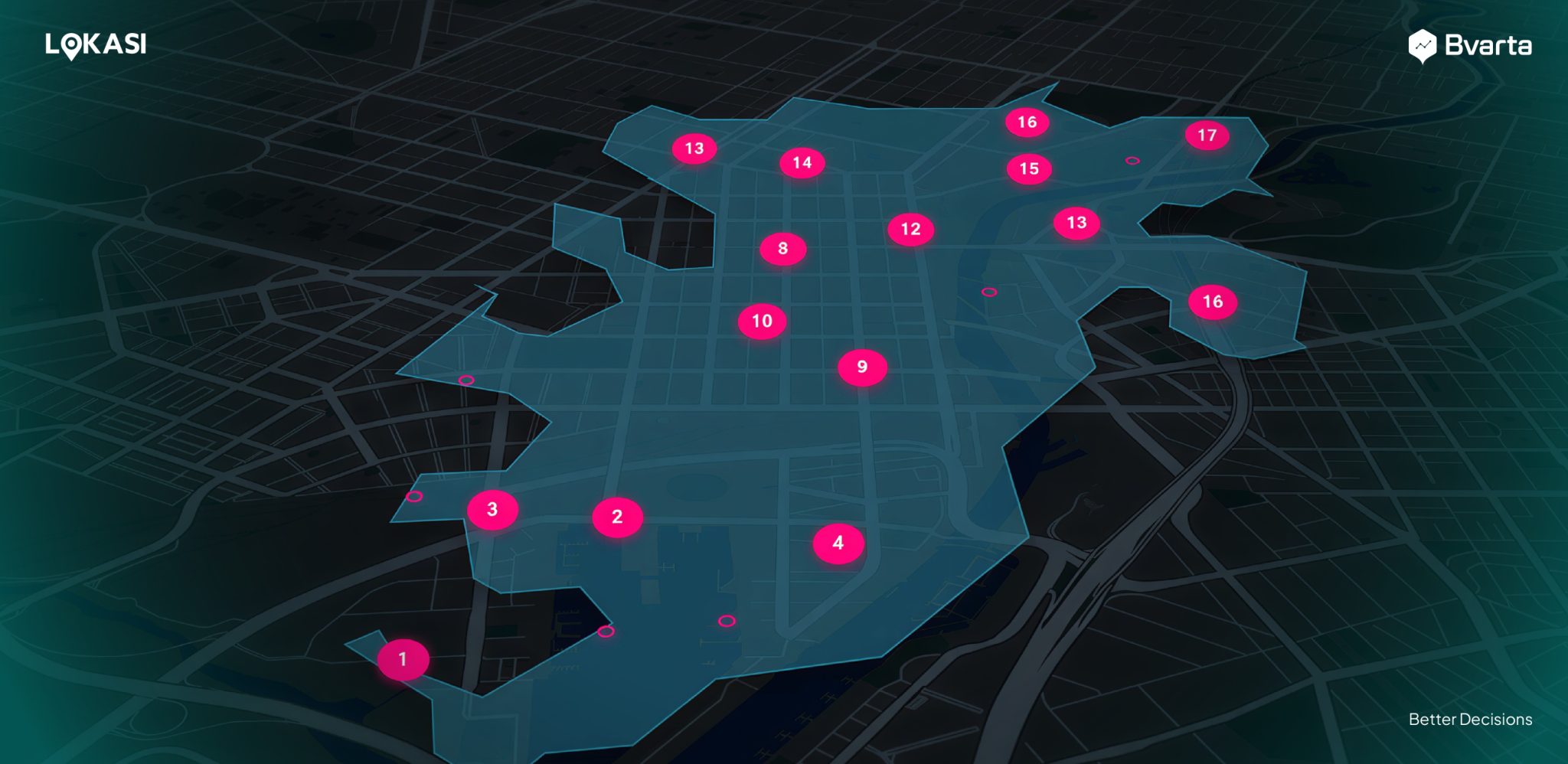
Location Intelligence allows users to visualize their entire charging station network, making it easier for businesses to understand the distribution of existing stations, identify underserved areas, and assess usage density at each location. These insights provide valuable guidance for expansion and strategic planning.
Providing Potential Location Recommendations
Location Intelligence can also recommend locations with high potential and strategic value. By leveraging various types of location data, such as Points of Interest (POIs), demographic information, people movement patterns, and other geospatial data, businesses can pinpoint the most promising areas for developing charging stations or other facilities.
This data driven approach not only helps identify the best locations but also minimizes the risk of misplacement, ensuring investments are more efficient and effective.
Location Analysis
In addition to providing location recommendations, Location Intelligence enables users to gain a deep understanding of the characteristics of each potential site. This technology can reveal information about the surrounding area, including public facilities, shopping centers, and high-traffic zones.
Moreover, businesses can access demographic data such as the age, income, and behavior of local residents, as well as information on traffic density and patterns of people movement in the area.
With these insights, businesses can evaluate a location’s accessibility, visibility, and overall potential in line with operational needs, allowing for more informed and strategic placement decisions.
Easily Find Strategic Locations for Electric Vehicle Charging Stations with LOKASI Intelligence
LOKASI Intelligence is a geospatial analytics platform that integrates Location Intelligence with comprehensive location data. Using LOKASI, businesses can receive recommendations for the most suitable and strategic locations to open electric vehicle (EV) charging stations.
The platform enables businesses to analyze important characteristics of each potential site, including the demographic profile of the surrounding community, population density, accessibility, visibility, disaster history, and socio-economic conditions.
With these comprehensive insights, businesses can quickly identify the best locations, minimizing selection risks while saving time, effort, and costs in planning and decision-making.
To learn more about how LOKASI Intelligence can help your business, please contact:
Email: [email protected] or WhatsApp: 0877 7907 7750
FAQ
What is the optimal location for an electric vehicle charging station?
The optimal location for an electric vehicle charging station is in an area with high traffic, a strategic position, and easy accessibility. Additionally, the location should have good visibility so that users can easily find and reach it, which helps increase usage and improve the operational efficiency of the charging station.
What are electric car charging stations called?
Electric car charging stations are called Public Electric Vehicle Charging Stations, or SPKLU for short.
How do I charge an electric car?
To charge an electric car, you can visit the nearest electric vehicle charging station. Alternatively, some electric vehicles can also be charged at home using a compatible home charging setup.