
According to data from the Central Statistics Agency (BPS), there were more than 4.85 million food and beverage businesses in Indonesia by 2023, and that number keeps growing as more people jump into the culinary scene.
But as the industry gets more crowded, the competition becomes tougher. That’s why businesses need to start adopting technology that gives them an edge. One of the most powerful tools available today is Location Intelligence, a technology that helps restaurants understand their market, find the best locations, and plan smarter expansion strategies.
In this article, we’ll explore five major benefits of Location Intelligence for restaurants and how it can help business owners make more informed decisions.
Contents
Why is Location Intelligence Important for the Food and Beverage Industry?
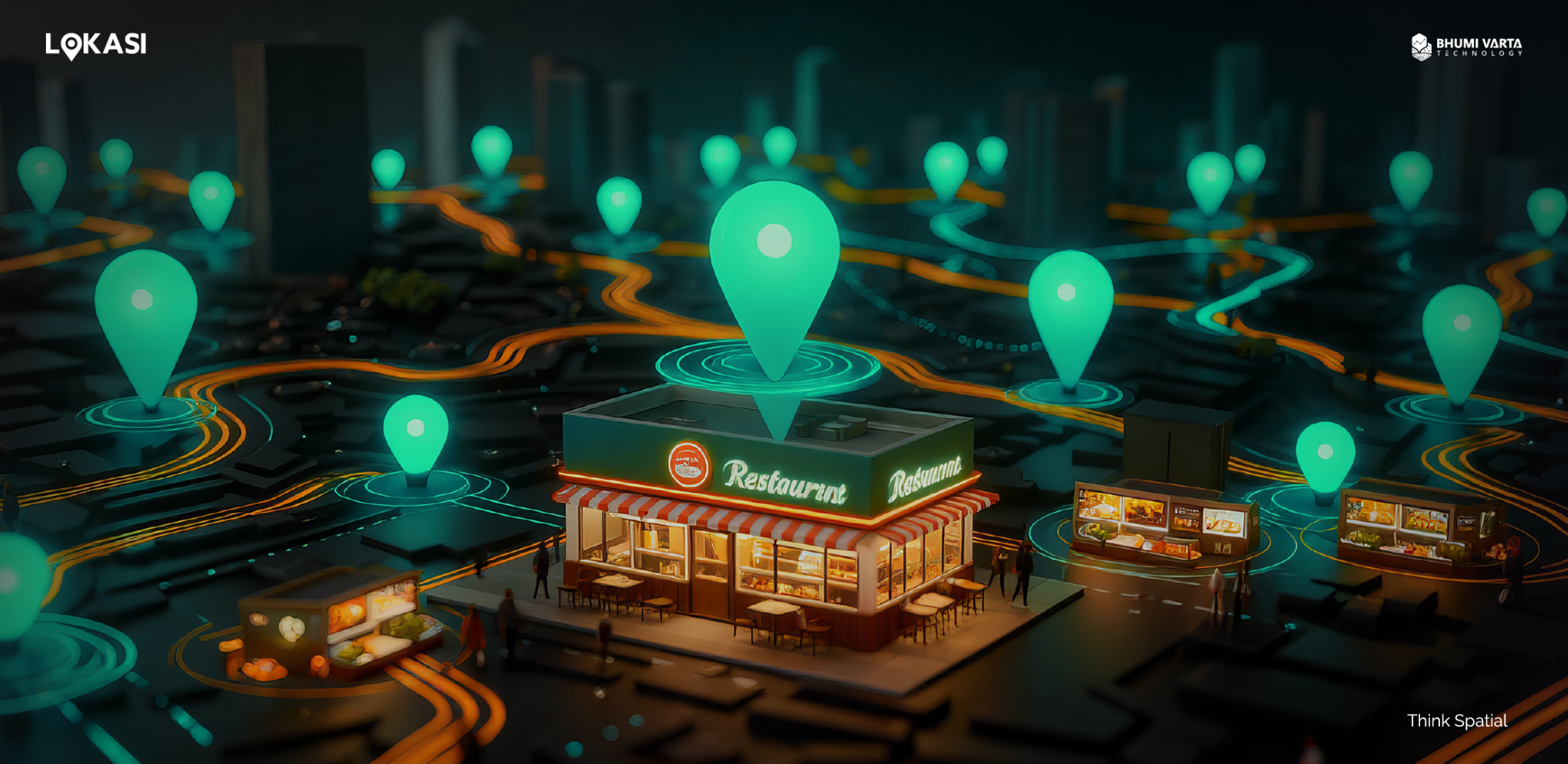
Before we go any further, let’s first understand what Location Intelligence is. Location Intelligence is an analytical approach that uses geospatial data to generate location-based insights.
These insights serve as a foundation for business decision-making, helping ensure that every decision is accurate, objective, and aligned with real-world conditions.
With the help of geospatial data, food and beverage businesses can identify the best locations for their outlets, understand who their potential customers are in the area, and analyze people’s movement patterns around those locations.
This helps businesses avoid the risk of choosing the wrong location, which can seriously affect the long-term success of a restaurant. Poor location selection is often one of the main reasons many businesses in this industry fail.
For instance, research in the UK shows that around 60% of restaurants close within their first year of operation, and one of the biggest contributing factors is choosing a location that doesn’t match the target market.
In addition, Location Intelligence also supports the development of more efficient operational and marketing strategies. For example, businesses can adjust operating hours to match peak customer demand, target promotional campaigns in areas with a high concentration of potential customers, and optimize supply chains to save both time and money.
How Location Intelligence Strengthens Restaurant Business Strategies
According to data from the Central Statistics Agency (BPS) released in 2022, there were 11,223 culinary businesses across Indonesia in 2020.
Of these, around 8,042, or nearly 72%, were restaurants and eateries. This shows the rapid growth of Indonesia’s culinary industry and the increasing intensity of competition within the sector.
With so many businesses in operation, culinary entrepreneurs need to be more strategic in their decision-making, especially when it comes to choosing locations, understanding customer segments, and developing marketing strategies. This is where Location Intelligence can play a key role.
Determining a Strategic Restaurant Location
Location is one of the most crucial factors in a restaurant’s success. An unsuitable location, whether due to a low customer base, difficult access, or a mismatch with the target market, can easily lead to business failure.
This is where Location Intelligence plays a vital role in helping businesses find truly strategic and profitable locations.
By leveraging various geospatial and location data, this technology can analyze multiple factors that influence an area’s potential.
The data analyzed includes population demographics (such as age, occupation, and purchasing power), points of interest (like schools, shopping centers, offices, and tourist attractions), as well as mobility data that reflects the density and movement of people around a location.
Through an in-depth analysis of this information, businesses can better understand the potential customer base in a specific area, as well as the visibility and accessibility of a location. This enables restaurants to choose locations that are not only crowded but also match the profile of their target customers.
A data-driven approach like this helps businesses minimize the risk of choosing the wrong location and significantly increases their chances of success.
Understanding the Competitive Landscape
When starting a restaurant business, understanding the competitive landscape is a crucial step that should not be overlooked. The presence of competitors in a certain area can actually indicate strong market potential.
However, having too many competitors can also pose a significant challenge, making it harder for new businesses to attract customers.
Location Intelligence allows businesses to conduct more accurate, data-driven competitor mapping.
This technology provides detailed information about competitors operating in a specific area, the distance between restaurant locations, and the overall distribution and density of competitors around a target location.
Through this analysis, businesses can evaluate market saturation, identify potential new areas, and even study competitor strategies, such as location choices and restaurant concepts.
Assessing Customer Activity and Potential
For restaurant businesses, the number of people passing by and engaging in activities around a location, also known as foot traffic, is a key factor in determining success.
The higher the foot traffic in an area, the greater the opportunity for a restaurant to attract customers and increase sales. That’s why understanding people’s movement patterns around a location is crucial before deciding to open a new branch.
Location Intelligence uses data from mobile devices to measure the density and flow of people in an area. This helps businesses identify how busy a location is at different times of the day and how long visitors typically stay.
This insight also helps distinguish between real business activity and apparent crowds.
For instance, a location might seem busy because it’s near a toll road or a major intersection, but in reality, most people are simply passing through without stopping.
Conversely, areas near offices, schools, or shopping centers tend to have more consistent activity and are often more relevant to a restaurant’s target customer base.
By understanding these foot traffic patterns, businesses can identify promising locations, maximize visibility, and reduce the risk of poor investment decisions caused by choosing a busy but unproductive area.
Understanding Your Business’s Target Market
Every restaurant has a different target market. Some focus on students, others on office workers, and some on young families. Therefore, understanding who lives or works in the area where you plan to open a restaurant is a crucial step before starting operations. This is where Location Intelligence plays an important role through demographic analysis.
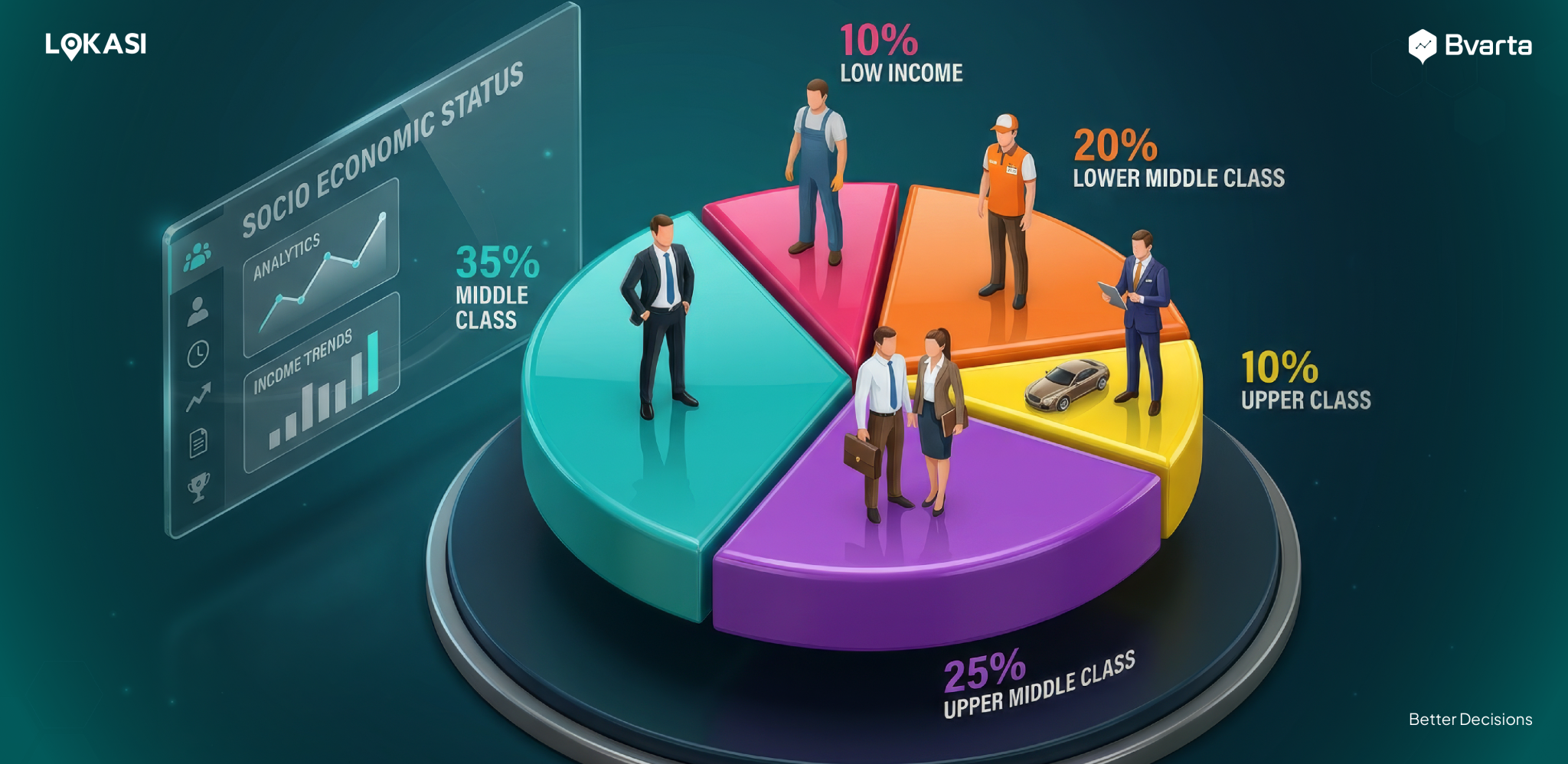
By utilizing demographic data, Location Intelligence helps businesses gain a deeper understanding of the population characteristics in a specific area. This analysis includes key information such as gender, age range, occupation, income level, and socioeconomic status.
For instance, a fast-food restaurant may perform better in a densely populated area dominated by young people or working professionals, while a family restaurant might be more suitable in residential areas with middle- to upper-income households. With these insights, businesses can make more informed decisions and minimize the risk of targeting the wrong market.
Efficient Branch Evaluation and Development
Finally, Location Intelligence plays a key role in helping businesses optimize their existing restaurant networks. For companies with multiple branches, it’s essential to ensure that every location operates efficiently and delivers the best possible results.
By combining geospatial data with sales data, Location Intelligence provides a comprehensive overview of each branch’s performance within its location context.
Through this analysis, businesses can identify underperforming branches and understand the reasons behind them, such as suboptimal location, high competition, or declining customer activity in the area.
From there, companies can decide on the most effective next steps, whether to close the branch, relocate to a higher-potential area, or improve performance with a new marketing strategy.
In addition, Location Intelligence helps identify new opportunities for expansion by pinpointing areas that are underserved by existing restaurant chains. With insights like these, businesses can expand their networks more efficiently, strategically, and based on solid data.
Optimize Your Restaurant Business with LOKASI
LOKASI is a geospatial analytics platform that integrates location intelligence with comprehensive location data. With LOKASI, businesses can easily identify the best locations for new branches while thoroughly analyzing the potential of each area.
The platform provides various essential data types, including demographic data to understand population characteristics, points of interest (POIs) to identify nearby facilities and activities, people traffic data to assess crowd levels and mobility, and socio-economic status (SES) data to illustrate purchasing power and the community’s economic profile.
This combination of data gives businesses a complete picture of market potential and customer behavior in each region. Moreover, LOKASI also helps businesses optimize the performance of their existing networks.
With LOKASI, businesses can move beyond guesswork and start making smarter, faster, and data-driven decisions to improve efficiency and strengthen growth strategies.
Learn more about how LOKASI Intelligence can help your business by contacting us at: Email: [email protected] or WhatsApp: 0877-7907-7750
FAQ
What is Location Intelligence?
Location Intelligence is an analytical method that uses geospatial data to generate insights based on location. These insights help businesses make smarter and more informed decisions.
What is considered a strategic location for developing a restaurant business?
A strategic location for a restaurant is one that offers high visibility and accessibility, heavy foot or vehicle traffic, and proximity to the target market. Businesses can use LOKASI Intelligence to identify the best sites for opening new restaurants, saving time, money, and effort.
How can you find a strategic location for your business?
To find a strategic business location, look for areas with high traffic, strong visibility, easy access, and closeness to your target customers. You can also use the LOKASI Intelligence platform to quickly and efficiently identify ideal locations, allowing you to save both time and resources.